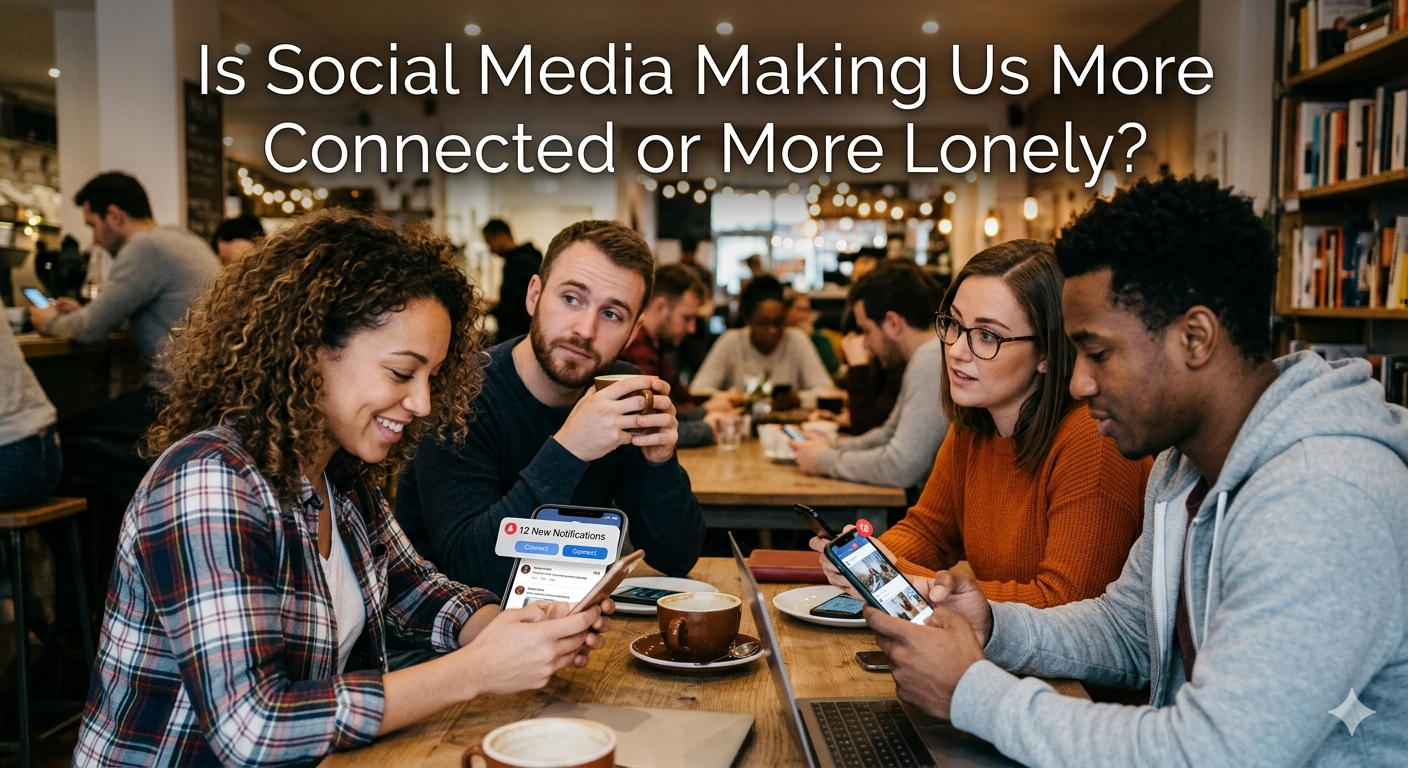

In today's digital age, social media has become an inseparable part of our daily lives. From scrolling through Instagram during breakfast to checking notifications before going to bed, millions of people spend hours each day on platforms designed to keep them connected. Social media has transformed the way we communicate, share experiences, and build relationships. Yet, despite being more connected than ever before, many people report feeling increasingly lonely and isolated. This raises an important question: Is social media truly bringing us together, or is it quietly pushing us further apart? At first glance, social media appears to be a powerful tool for connection. It allows people to communicate instantly regardless of geographical distance. Families separated by continents can stay in touch through video calls and messages. Friends can share milestones, photos, and updates with just a few taps. Communities built around shared interests, hobbies, or causes can connect individuals who might never have met otherwise. For many people, especially those living far from loved ones, social media provides a valuable sense of belonging and accessibility.
The benefits become even more apparent during times of crisis. During global events such as natural disasters, pandemics, or social movements, social media enables people to exchange information rapidly and offer support to one another. It has given individuals a voice, allowing them to share stories, raise awareness about important issues, and build networks of support. For people struggling with niche interests, disabilities, or social anxiety, online communities can provide acceptance and understanding that may be difficult to find in their immediate surroundings. However, the story does not end there. While social media increases the quantity of our interactions, it does not necessarily improve their quality. A person may have hundreds or even thousands of followers yet still feel profoundly lonely. Digital interactions often lack the emotional depth and authenticity of face-to-face conversations. A "like," comment, or emoji reaction can provide a brief sense of validation, but it rarely replaces meaningful human connection. One of the most significant concerns associated with social media is the culture of comparison it creates. People generally present the best versions of themselves online. Their profiles showcase achievements, vacations, celebrations, and carefully curated moments of happiness. Rarely do they post their struggles, failures, or insecurities. As a result, users are constantly exposed to idealized versions of other people's lives.
This endless comparison can negatively affect self-esteem and mental well-being. Someone scrolling through photos of friends traveling, succeeding professionally, or appearing happy may begin to feel that their own life is inadequate. Over time, these comparisons can contribute to feelings of loneliness, anxiety, and dissatisfaction. Ironically, while social media connects people to others, it can simultaneously make them feel excluded from the very lives they are observing.
Another factor contributing to loneliness is the replacement of real-world interactions with digital ones. Many people spend more time engaging with screens than with those physically around them. Conversations that once took place in person are increasingly conducted through text messages and social media platforms. While online communication is convenient, it often lacks the emotional richness of face-to-face interaction, including body language, tone of voice, and genuine presence.
Furthermore, social media platforms are designed to capture and retain user attention. Notifications, likes, shares, and endless scrolling features encourage people to spend more time online. While these features can be entertaining, excessive usage may lead individuals to neglect real-world relationships. Instead of strengthening social bonds, prolonged social media use can sometimes create a cycle of passive consumption where users observe others rather than actively engaging with their own communities. The paradox of social media is that it offers connection while sometimes fostering loneliness. The difference often lies in how it is used. Active engagement—such as meaningful conversations, participation in supportive communities, and maintaining relationships can enhance feelings of connection. Passive use, on the other hand, such as endlessly scrolling through content and comparing oneself to others, is more likely to contribute to feelings of isolation. Research and personal experiences increasingly suggest that the quality of social interaction matters more than the quantity. Having a smaller number of meaningful relationships often provides greater emotional fulfilment than having a large online audience. Human beings naturally seek genuine understanding, empathy, and belonging needs that cannot always be satisfied through digital interactions alone. This does not mean social media is inherently harmful. Like any tool, its impact depends on how it is used. When approached mindfully, social media can strengthen existing relationships, help people discover supportive communities, and provide opportunities for learning and growth. However, when it becomes a substitute for real-world connections or a source of constant comparison, it can contribute to feelings of loneliness and emotional disconnection.
In conclusion, social media is both a bridge and a barrier. It has undoubtedly revolutionized communication and made the world more interconnected than ever before. Yet, it has also introduced new challenges related to mental health, comparison, and authentic human connection. The question is not whether social media makes us more connected or more lonely as it can do both. The real challenge lies in finding a balance that allows technology to enhance our relationships rather than replace them. In a world filled with followers, friends, and notifications,
Comments
1Sign in to join the conversation
Sign in