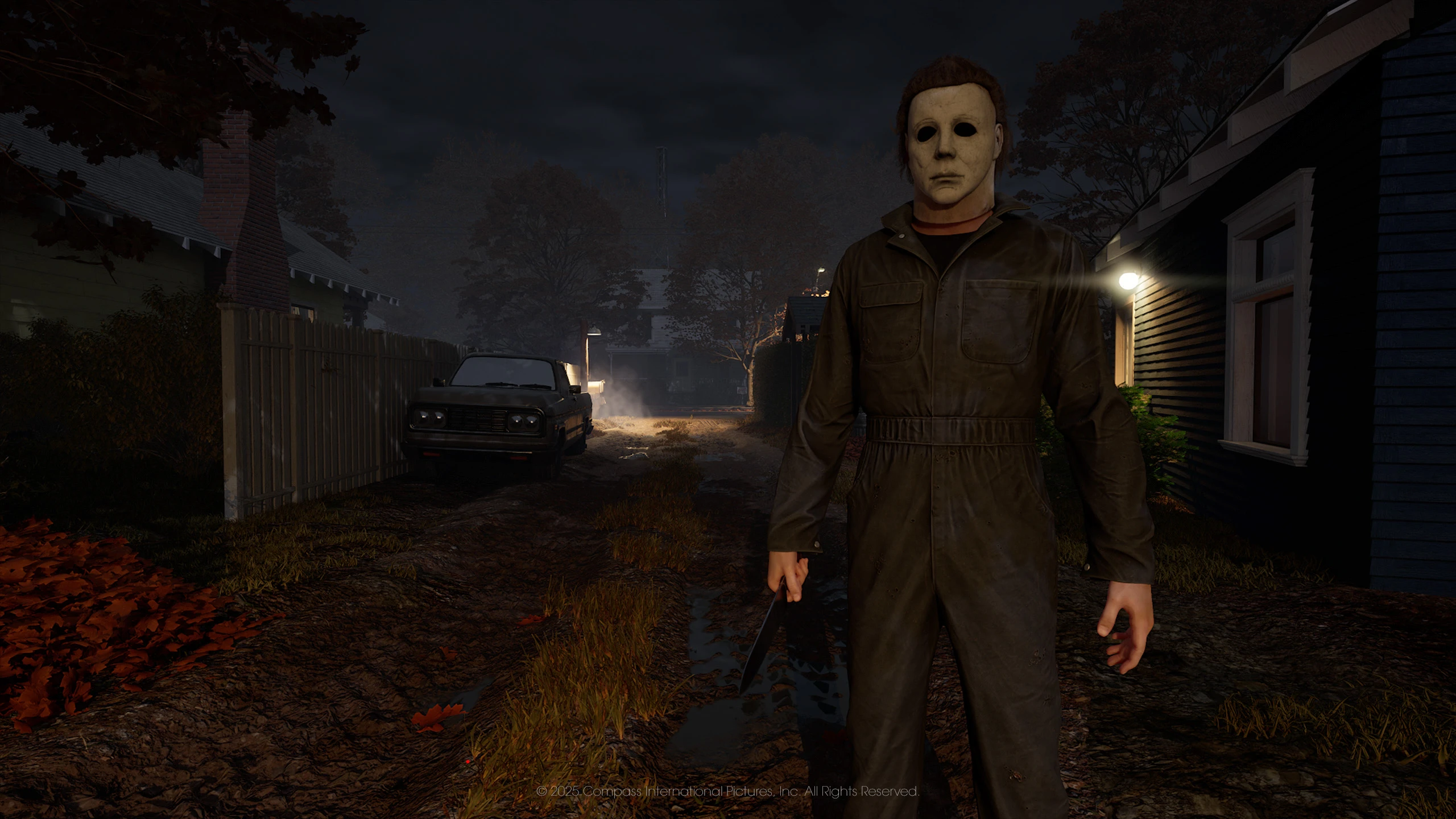

What if running from Michael Myers isn't your best survival strategy?
That's the question Halloween: The Game appears determined to answer.
Launching on September 8, 2026, IllFonic's new horror game puts four Heroes of Haddonfield against one player controlling Michael Myers in a 1v4 asymmetrical multiplayer setup.
But there's an important twist.
You're not completely helpless.
Instead of simply sprinting toward the nearest exit every time Michael appears, Heroes can use weapons, everyday household items, NPCs, police intervention and the environment itself to create opportunities to survive.
And that could make Halloween one of the more interesting evolutions of the asymmetrical horror formula.
Michael Myers Isn't Just Another Killer

Asymmetrical horror usually creates a simple power fantasy.
One player is the monster.
Everyone else tries to survive.
But Michael Myers changes the equation because his biggest weapon isn't necessarily speed.
It's fear.
The official game description emphasizes Michael's ability to stalk residents through shadows and stealth while Heroes have to organize their response around his unpredictable pursuit.
That creates a very different dynamic.
If you know exactly where Michael is, escaping is relatively straightforward.
The terrifying moments happen when you don't know where he is.
Is he behind the house?
Watching from across the street?
Waiting for you to leave the group?
Or deliberately allowing you to think you've escaped?
That's where the environment becomes important.
Haddonfield Isn't Just a Map
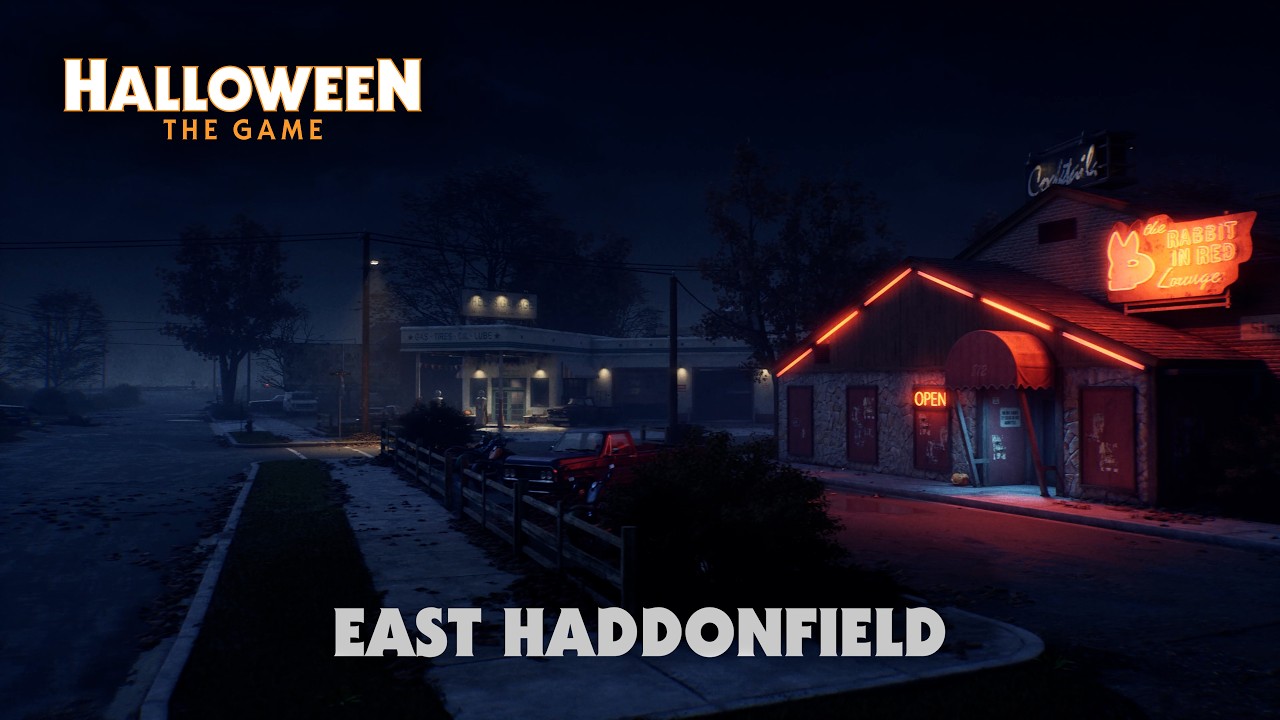
The biggest idea behind Halloween: The Game is that Haddonfield isn't simply somewhere you run through.
It's a sandbox you can interact with.
The developers describe dynamic map features, distinct gameplay systems and NPC interactions as major parts of the experience.
That matters because it changes how players think about survival.
Instead of asking:
"Where is the exit?"
You can start asking:
"How can I make this area work against Michael?"
That difference sounds small.
It isn't.
It turns the map from scenery into strategy.
Stop Running. Start Setting Up.
Imagine Michael is approaching your location.
Your first instinct might be to run.
But what if running immediately is actually the worst decision?
A better player might use the time to prepare the environment, coordinate with teammates, arm nearby NPCs or trigger systems that bring additional help into the neighborhood.
Official descriptions specifically mention convincing townsfolk and contacting police, with increasingly powerful neighborhood patrols becoming part of the response. Heroes can also command and equip NPCs with weapons.
That creates something asymmetrical horror desperately needs:
counterplay.
You're still weaker than Michael.
You're still vulnerable.
But you aren't just waiting to be caught.
You're manipulating the situation.
The Environment Becomes Your Weapon
This is where the game's "horror sandbox" design becomes particularly interesting.
A household object isn't necessarily valuable because it can defeat Michael.
It can be valuable because it buys you time.
A weapon might create an opening.
An environmental interaction might change your escape route.
A police response might force Michael to reconsider his approach.
An NPC with a weapon could create enough distraction for another player to escape.
Suddenly, survival isn't about finding one perfect hiding spot.
It's about creating a chain of small advantages.
And that's much closer to how a horror movie actually works.
The characters aren't necessarily stronger than the killer.
They simply try to stay one step ahead.
Teamwork Matters More Than Speed
The 1v4 format also makes communication incredibly important.
Four players running in four different directions might give Michael exactly what he wants.
A coordinated team can do something very different.
One player can investigate.
Another can prepare an escape route.
Someone else can alert residents.
Another can help organize defensive resources.
The objective isn't necessarily to overpower Michael.
It's to make him waste time.
That could become one of the defining strategies of Halloween: The Game.
Every second Michael spends dealing with one problem is another second for the Heroes.
Michael Can Fight Back
Of course, the system only works if Michael remains terrifying.
And that's the balancing act.
If Heroes can simply turn Haddonfield into a giant obstacle course that Michael can't overcome, the horror disappears.
The official description instead positions Michael as an unpredictable and unkillable enemy, meaning the Heroes' tools are designed to create opportunities rather than turn them into superheroes.
That's important.
A successful counterattack shouldn't feel like:
"We defeated Michael."
It should feel like:
"We survived Michael."
Those are two completely different emotions.
Why This Could Evolve Asymmetrical Horror
Games in this genre have traditionally revolved around a familiar loop:
Hide → Run → Complete objectives → Escape.
Halloween: The Game appears to be pushing that loop toward something more reactive.
Its systems encourage players to interact with the neighborhood, influence NPC behavior, call authorities and use available resources to create openings.
That means the same chase doesn't necessarily have to play out the same way twice.
One match could involve a desperate escape through the neighborhood.
Another could involve players deliberately attracting Michael toward an area filled with defensive resources.
A third could completely collapse because the team makes one bad decision.
That's where replayability comes from.
Not simply bigger maps.
More possibilities.
The Horror Is in the Decision-Making
The most interesting horror games aren't always the ones with the biggest jump scares.
They're the ones that make you question your next decision.
Should you hide?
Should you run?
Should you help the other player?
Should you alert the police?
Should you risk confronting Michael?
Should you stay together?
Or should you split up and create multiple problems for him?
Halloween: The Game has the ingredients to make those decisions matter.
And that's arguably more frightening than simply seeing Michael sprint toward you.
Because when you know what you're supposed to do, horror becomes predictable.
When you're not sure what the correct decision is, every choice becomes terrifying.
What Happens Next?
The biggest question after launch will be whether these systems actually produce meaningful variety.
Can experienced players consistently outsmart Michael?
Do environmental interactions remain useful after players learn the maps?
Can Heroes coordinate without making Michael feel powerless?
And most importantly:
Does the game stay scary after you've played dozens of matches?
Those answers will determine whether Halloween: The Game becomes another asymmetrical horror title or something that genuinely pushes the genre forward.
The game launches September 8, with Deluxe Edition owners receiving advance access beginning September 4.
That gives the community very little time to discover whether Haddonfield's biggest advantage is its escape routes — or its ability to turn against the killer.
🎮 The Bottom Line
Michael Myers has spent decades teaching horror fans one lesson:
When you see him, run.
Halloween: The Game wants to teach players something different.
Think first.
Use the neighborhood.
Use your teammates.
Use the people around you.
Create distractions.
Call for help.
Turn small advantages into escape opportunities.
That's what could make this game more than another 1v4 chase simulator.
The real evolution of asymmetrical horror may not be giving survivors more power.
It may be giving them more ways to think.
And if Haddonfield really can become a weapon, Michael Myers might finally have something to fear.
What do you think? Would you rather survive Michael by constantly running, or would you prefer a horror game that lets you set up traps and fight back using the environment? Let us know in the comments.
Comments
Sign in to join the conversation
Sign inNo comments yet
Be the first to share your thoughts!