
GTA 6 Economics Torched: Why Indie CEOs Say Rockstar Needs to Sell to Everyone to Break Even
There is a strange irony sitting underneath the hype surrounding Grand Theft Auto 6: the bigger a game becomes, the harder it becomes to make the economics work.
That is the argument behind a viral comment from Blazej Zywiczynski, CEO of indie studio Fairy Mount Games. His studio is preparing to launch Flame, Forest & Flood on the exact same day as GTA 6, November 19, 2026.
Zywiczynski argues that his small game can reach a 5x return on investment with roughly 30,000 copies sold, while GTA 6 would need to sell approximately one copy to every PlayStation 5 and Xbox Series X|S owner to reach the same return multiple.
That sounds almost absurd when you put the numbers next to each other.
But there is an important catch.
This is not evidence that Rockstar needs to sell 100 million-plus copies simply to "break even." It is a comparison based on an ROI target, and Zywiczynski's figures rely on financial assumptions that Rockstar and Take-Two have not publicly disclosed.
That distinction is what makes the quote interesting.
The real story isn't that GTA 6 is somehow in financial trouble. It is that modern AAA games can require an enormous audience to justify their enormous production costs, while a tiny studio can potentially build a sustainable business around a fraction of that audience.
────────────────────────────────────────
────────────────────────────────────────
The Viral GTA 6 Economics Quote
The comparison comes from Blazej Zywiczynski, CEO of Fairy Mount Games.
Fairy Mount Games is a newly founded studio whose debut game, Flame, Forest & Flood, is scheduled to launch on Steam on November 19, 2026.
That date happens to be the same day Rockstar plans to release GTA 6 on PlayStation 5 and Xbox Series X|S.
Most developers would probably see that scheduling conflict as a nightmare.
Zywiczynski does not appear to view it that way.
His argument is that the two games are targeting fundamentally different audiences.
Flame, Forest & Flood is a cozy strategy game designed around accessible multiplayer and social play. GTA 6 is one of the largest and most expensive entertainment productions in the world.
That difference led Zywiczynski to make a much broader point about the economics of modern game development.
His claim is that Flame, Forest & Flood can achieve a 5x return on investment with approximately 30,000 sales, while GTA 6 would need to sell to essentially the entire current PlayStation and Xbox console audience to achieve the same multiple.
The quote went viral because it turns the usual GTA 6 conversation upside down.
Instead of asking how many hundreds of millions of copies GTA 6 could eventually sell, it asks a much more uncomfortable question:
How much does a blockbuster actually have to sell before its enormous budget produces the return investors expect?
────────────────────────────────────────
What the Indie CEO Actually Compared
The most important thing to understand is that this is a comparison of ROI, not simple profitability.
ROI means return on investment.
If a studio spends $1 million and eventually receives $5 million attributable to the project, it has achieved a 5x return on the initial investment under that simplified model.
That does not mean the studio keeps $5 million in profit.
There are platform fees, taxes, marketing, distribution, refunds, regional pricing, publisher agreements, salaries, overhead and many other costs.
The same problem becomes even more important when looking at GTA 6.
Rockstar's actual development and marketing budget has not been publicly disclosed in a way that allows outsiders to independently calculate the exact number of copies required for a 5x ROI.
So the viral claim should be treated as an industry comparison rather than a verified Rockstar financial model.
The interesting part is the scale difference.
A small studio can potentially recover its investment with tens of thousands of customers.
A blockbuster can need millions of customers before its economics begin to look attractive.
That is the fundamental tension Zywiczynski is highlighting.
────────────────────────────────────────
Why 30,000 Copies Can Be Enough for an Indie Game
Imagine two hypothetical studios.
Studio A spends $2 million creating a small strategy game.
Studio B spends hundreds of millions developing an enormous open-world blockbuster.
If both studios demand the same percentage return, their required revenue targets are completely different.
Studio A doesn't need a massive global audience.
It needs a relatively small group of customers willing to buy the game.
That is exactly where the 30,000-unit figure becomes interesting.
Thirty thousand copies sounds tiny compared with GTA's historical sales numbers. But for a small studio, it can represent a meaningful commercial result.
There are also advantages that come from building a smaller game.
A smaller production can potentially:
employ fewer developers
maintain a smaller marketing operation
avoid enormous technology costs
reduce asset-production requirements
launch on fewer platforms
make changes faster
target a specific niche
build its audience through communities rather than mass-market advertising
That does not guarantee profitability.
A 30,000-copy target only makes sense relative to the game's actual budget, price, platform fees and other costs.
But the basic principle is straightforward.
The lower the investment, the smaller the audience required to generate a large percentage return.
────────────────────────────────────────
Why GTA 6 Needs a Completely Different Scale
GTA 6 operates in another universe.
Rockstar has spent years developing the game, while Take-Two is positioning it as the next major evolution of the Grand Theft Auto franchise.
The game is officially scheduled for November 19, 2026, on PlayStation 5 and Xbox Series X|S. The standard edition is priced at $79.99 in the United States.
That means Rockstar is not simply selling a small piece of entertainment.
It is maintaining a gigantic production pipeline involving technology, animation, voice acting, world building, motion capture, testing, marketing, localization and infrastructure.
The larger the production becomes, the more copies it needs to sell to justify the investment.
And that creates the unusual mathematical situation behind Zywiczynski's statement.
A game can be incredibly successful with 30,000 customers and still be a complete commercial failure for a project built around a gigantic budget.
The definition of "success" changes with the cost of production.
────────────────────────────────────────
The "Every Console Owner" Calculation
This is where the viral claim gets its shock value.
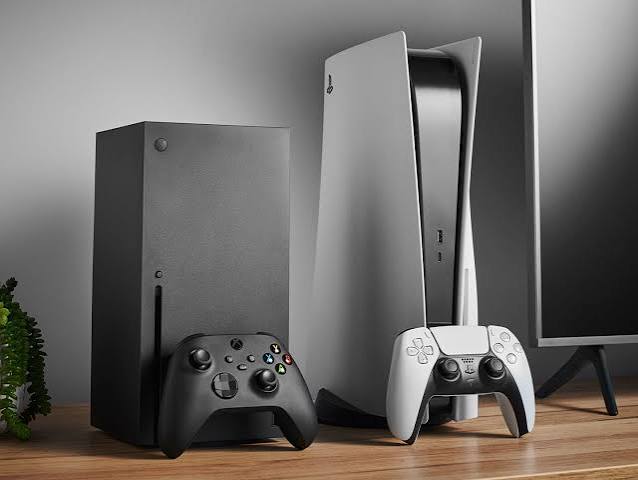
Sony reported more than 95 million PS5 units sold worldwide as of June 30, 2026.
Independent industry estimates put the Xbox Series X|S installed base at roughly the mid-to-high 30-million range around the same period.
That means the combined current-generation console population is somewhere around the 130-million-unit range, depending on which estimates are used.
Zywiczynski's comparison essentially says that GTA 6 would need to sell at a scale approaching that entire audience to achieve the same 5x ROI target.
But this should not be interpreted literally as a confirmed Rockstar break-even requirement.
There are several reasons.
First, console ownership is not equivalent to game purchases.
Not every PS5 or Xbox owner buys every major release.
Second, GTA 6 is not permanently limited to the launch-day console audience.
A future PC release could expand the addressable market substantially, although Rockstar has not announced an official PC version for GTA 6.
Third, GTA 6 is part of a franchise with enormous commercial reach.
Take-Two has said the Grand Theft Auto franchise has sold more than 470 million units worldwide, while GTA V alone has surpassed 200 million copies according to the company.
And fourth, the GTA business model is not limited to the initial boxed or digital sale.
That final point may be the biggest omission from the viral comparison.
────────────────────────────────────────
GTA 6 Has Revenue Streams the Comparison Doesn't Capture
A simple "copies sold × game price" calculation does not represent the entire financial picture of a Grand Theft Auto release.
The biggest unknown is GTA Online.
Rockstar has not fully detailed the commercial structure of GTA 6's multiplayer ecosystem, but GTA V demonstrated how valuable a long-running online platform can become.
GTA Online transformed GTA V from a traditional game sale into a persistent entertainment platform.
Players could purchase the base game and then continue spending money inside the ecosystem over many years.
That changes the economics dramatically.
A player who purchases GTA 6 for $79.99 once is one transaction.
A player who remains active in an online ecosystem for years can represent substantially more lifetime value.
This is why comparing GTA 6 with a 30,000-unit indie game purely through launch sales is inherently incomplete.
The indie studio may have a much lower cost base.
Rockstar potentially has a much larger long-term revenue opportunity.
Neither side of that equation should be ignored.
────────────────────────────────────────
The Hidden Advantage of GTA 6
There is another part of the argument that gets overlooked.
A huge budget is a liability, but scale can also become an advantage.
Rockstar already owns one of the most recognizable entertainment brands in the world.
It does not need to introduce Grand Theft Auto to consumers.
The name itself generates enormous attention.
Every trailer, screenshot, gameplay reveal and announcement becomes news.
That reduces some of the customer-acquisition problem that smaller developers face.
An indie studio might spend a significant portion of its budget simply trying to convince people that its game exists.
Rockstar can announce a GTA trailer and receive worldwide coverage without buying anything close to equivalent exposure.
That doesn't erase the cost of GTA 6.
But it demonstrates why comparing the two games only by unit economics can be misleading.
They are playing completely different games commercially.
────────────────────────────────────────
Why AAA Development Has Become So Risky
The more interesting question is why the industry keeps producing projects that require enormous sales numbers in the first place.
AAA games have steadily expanded in scope.
Players expect:
- larger worlds
- more detailed characters
- realistic animation
- advanced physics
- huge voice casts
- cinematic presentation
- online functionality
- accessibility features
- extensive localization
- years of post-launch support
Every additional feature creates development and testing costs.
And unlike a movie, a modern AAA game can continue receiving updates for years after launch.
That can generate additional revenue, but it also means the original production is only the beginning of the financial commitment.
This is one reason blockbuster development has become increasingly concentrated among a relatively small number of publishers.
The capital required to make these games creates a barrier that smaller studios simply cannot cross.
────────────────────────────────────────
Indie Games Play a Different Numbers Game
The 30,000-unit comparison becomes more useful when viewed from the perspective of risk.
Suppose an indie studio spends a few million dollars creating a game.
It does not need GTA-level popularity.
It might only need a dedicated audience that appreciates exactly what the game offers.
That is one of the fundamental strengths of the modern indie market.
A game can target a niche rather than trying to appeal to everyone.
Flame, Forest & Flood is deliberately positioning itself as something different from GTA 6.
The developers describe it as a cozy experience that can be played with friends, family members and even people who aren't traditional gamers.
That means its commercial strategy isn't necessarily:
"Beat GTA 6."
It is closer to:
"Find the people who want something GTA 6 isn't offering."
That is a very different business model.

────────────────────────────────────────
Why Launching Beside GTA 6 Is Still Dangerous
There is one problem Zywiczynski cannot completely escape.
Attention.
Even if the audiences are different, GTA 6 will dominate the gaming conversation around November 19.
Every major gaming outlet will cover it.
Every streaming platform will be filled with GTA content.
YouTube creators will upload gameplay.
Social media will be flooded with clips.
Search traffic will explode.
That creates a discoverability problem for smaller releases.
A player doesn't have to choose between two games in a literal purchasing sense for one game to hurt the other.
The larger game can consume the audience's time.
If someone spends 100 hours exploring GTA 6 during launch month, that person has less time available for a small indie game.
For an indie developer, that can be just as important as the number of copies sold.
────────────────────────────────────────
The Real Lesson Behind the 30,000-Unit Target
The most interesting part of the viral quote isn't actually GTA 6.
It is the difference between scale and efficiency.
A blockbuster company can spend enormous amounts of money because it expects an enormous audience.
An indie company can survive with a much smaller audience because its investment is smaller.
Neither approach is automatically superior.
They simply create different economic equations.
That is why the statement that Rockstar needs to "sell to everyone" should be treated carefully.
It is a dramatic way of describing the enormous scale of AAA economics.
It is not a verified statement that GTA 6 needs 130 million sales just to avoid losing money.
The real Rockstar financial equation is much more complicated.
Game price.
Platform revenue share.
Development costs.
Marketing.
Regional pricing.
Pre-orders.
Deluxe editions.
Future PC sales.
GTA Online.
Microtransactions.
Long-term engagement.
All of these variables matter.
And most of them are not public enough to produce an exact independent break-even calculation.
────────────────────────────────────────
GTA 6 Economics Shows the Industry's Weirdest Contradiction
The strange thing about modern AAA games is that success can look completely different depending on the size of the project.
For Flame, Forest & Flood, 30,000 sales could potentially represent a major commercial milestone.
For GTA 6, 30,000 sales would be almost meaningless.
That is the paradox.
The more successful a studio becomes at building enormous games, the more customers it needs to keep that model financially sustainable.
Rockstar has an enormous advantage because Grand Theft Auto is one of the world's strongest gaming brands.
But that advantage comes with enormous expectations.
GTA 6 cannot simply be a game that sells well.
It has been positioned as a generation-defining release, and the business surrounding it is expected to operate at a similarly massive scale.
The indie comparison exposes the other side of the industry.
A studio does not necessarily need millions of customers.
Sometimes it needs the right 30,000.
────────────────────────────────────────
What Happens If GTA 6 Sells Less Than Expected?
This is where the economics become particularly interesting.
A blockbuster does not necessarily fail because it misses an arbitrary sales number.
Publishers evaluate games through multiple financial horizons.
A game can launch below expectations and still recover through:
- later price reductions
- additional platforms
- PC releases
- online monetization
- downloadable content
- subscription deals
- long-tail sales
- international expansion
GTA 6 has another advantage that almost no other game possesses: the Grand Theft Auto brand itself.
The previous game has remained commercially relevant for more than a decade.
That creates a potential long tail that most indie games simply cannot replicate.
So while the upfront investment is enormous, Rockstar is not necessarily depending on one launch weekend to recover it.
────────────────────────────────────────
GTA 6 vs. A 30,000-Unit Indie Game
| Factor | GTA 6 | Flame, Forest & Flood |
|---|---|---|
| Developer | Rockstar Games | Fairy Mount Games |
| Publisher | Rockstar / Take-Two | Fairy Mount Games |
| Release date | November 19, 2026 | November 19, 2026 |
| Initial platforms | PS5, Xbox Series X|S | PC |
| Target audience | Mass-market AAA | Niche/cozy strategy |
| Production scale | Extremely large | Small indie |
| CEO-stated ROI target | 5x comparison | 5x comparison |
| Sales figure discussed | Near current-gen console scale | ~30,000 units |
| Long-term online opportunity | Potentially significant | Much smaller |
| Marketing challenge | Massive built-in awareness | Building awareness from scratch |
The comparison is therefore less about which game will sell more.
It is about how many customers each business model needs to justify its investment.
────────────────────────────────────────
FAQ
Does GTA 6 really need to sell to every PS5 and Xbox owner to break even?
Not based on publicly verified financial data. The "every console owner" figure comes from Fairy Mount Games CEO Blazej Zywiczynski's comparison of the 5x ROI targets for his indie game and GTA 6. Rockstar has not publicly disclosed enough financial information to independently verify that calculation.
Where did the 30,000-unit figure come from?
Zywiczynski said Flame, Forest & Flood could achieve a 5x return on investment with approximately 30,000 copies sold.
What is the difference between ROI and profit?
ROI measures the return relative to an investment. A 5x ROI target is not the same thing as saying a company will keep five times its original development budget as pure profit.
When does GTA 6 release?
Rockstar currently lists November 19, 2026, for PlayStation 5 and Xbox Series X|S.
Is GTA 6 coming to PC?
Rockstar has not announced an official PC release date for GTA 6.
Why is GTA 6's business model different from an indie game?
GTA 6 has the potential to generate revenue through a huge initial audience and potentially years of additional monetization around its online ecosystem. A small indie game generally operates with a much smaller development budget and audience.
Why would an indie studio launch on the same day as GTA 6?
Fairy Mount Games argues that Flame, Forest & Flood targets a substantially different audience and provides a quieter, social alternative rather than competing directly with GTA 6 for the same type of player.
────────────────────────────────────────
Final Take
The viral GTA 6 economics argument sounds extreme because the numbers behind modern AAA development are extreme.
An indie studio can potentially build a business around tens of thousands of customers.
Rockstar is building one of the most expensive and widely anticipated games in the industry.
That means the required scale of success is completely different.
The claim that GTA 6 needs virtually every current-generation console owner to reach a 5x ROI is an indie CEO's financial comparison, not a confirmed Rockstar break-even calculation.
But the comparison still highlights something important about the gaming industry.
Big games do not automatically become safer investments just because more people know about them.
Their budgets grow.
Their expectations grow.
Their marketing grows.
Their required audience grows with them.
Meanwhile, a small team can sometimes survive by finding a much smaller audience that genuinely wants what it has built.
That is the real contrast behind the 30,000-unit number.
GTA 6 is betting on extraordinary scale.
The indie model is betting that extraordinary scale isn't always necessary.
────────────────────────────────────────
────────────────────────────────────────
SOURCES / FACT CHECK NOTES
Rockstar officially lists November 19, 2026 as GTA 6's release date and PlayStation 5/Xbox Series X|S as its announced launch platforms.
Take-Two's official announcement lists the standard GTA 6 price at $79.99 and confirms the November 19, 2026 launch.
Fairy Mount Games CEO Blazej Zywiczynski is the source of the 30,000-unit / 5x ROI comparison; reporting also identifies Flame, Forest & Flood as the studio's debut game and confirms its November 19 release.
Sony reported more than 95 million PS5 units sold worldwide as of June 30, 2026.
Independent estimates put Xbox Series X|S sales around 35–37 million units in 2026, although Microsoft does not publish a current official installed-base figure.
The 130-million-plus combined-console figure is therefore an estimate, not a number Rockstar has publicly used for its financial planning.
The claim that GTA 6 needs virtually every console owner for a 5x ROI should be presented as Zywiczynski's comparison, not as independently verified Rockstar financial data.
Take-Two has previously reported that the Grand Theft Auto franchise has sold more than 470 million units worldwide, illustrating the unusually large existing audience behind the property.
Flame, Forest & Flood is currently listed on Steam for November 19, 2026.