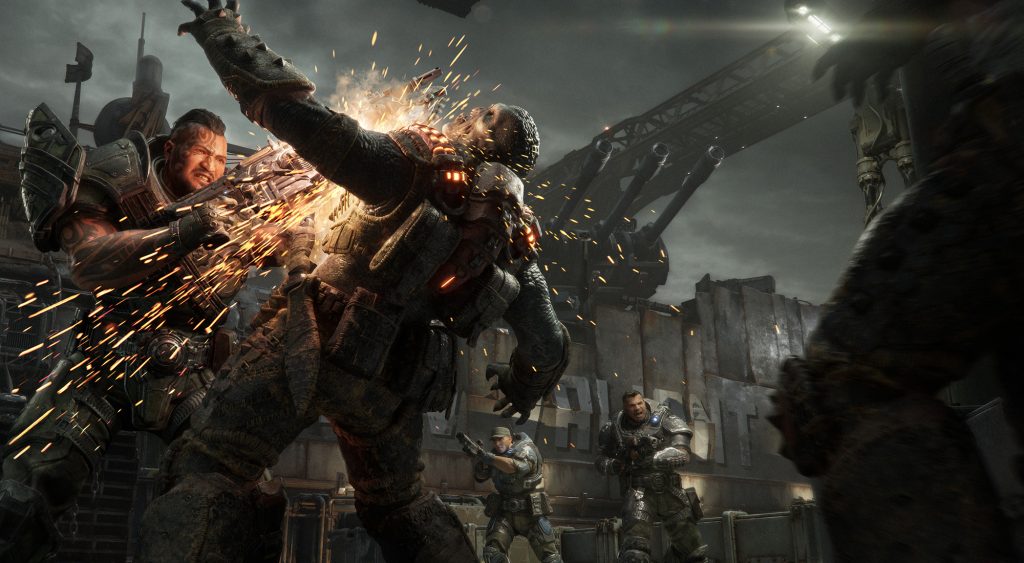

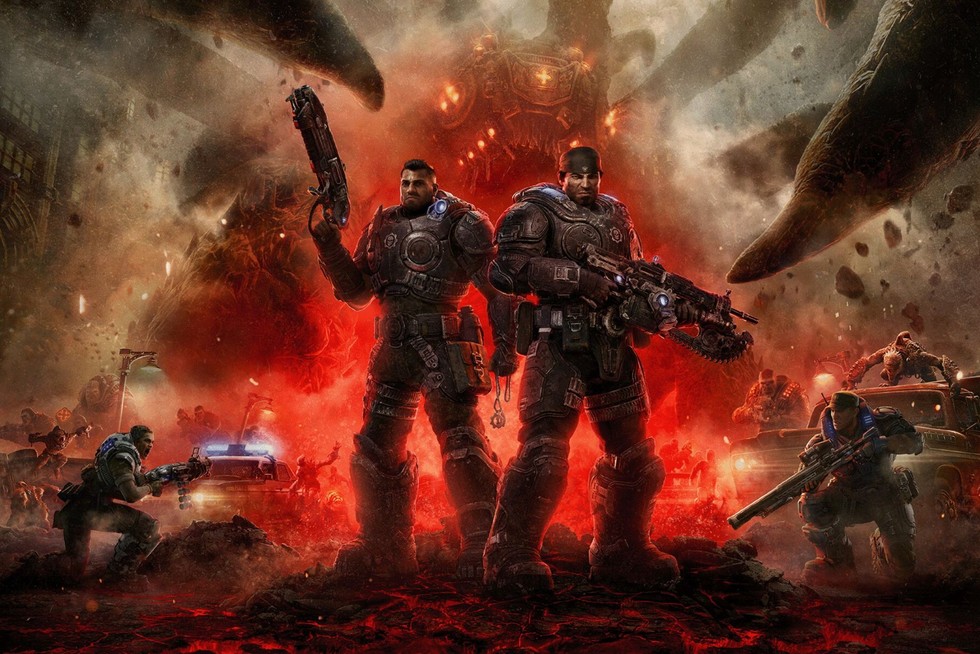
What if the safest piece of cover on the battlefield suddenly wasn't safe anymore?
That's the question Gears of War: E-Day appears determined to answer.
The classic Gears formula has always been built around cover. Find a wall, crouch behind it, pop out, fire, reposition, repeat. It's a rhythm that helped define the third-person shooter.
But E-Day is taking that rhythm and adding a dangerous new variable:
The battlefield doesn't have to stay the way you found it.
With Unreal Engine 5 powering the game, E-Day is pushing destruction, movement, traversal, and environmental interaction further than previous entries. The result isn't simply a prettier version of the old cover shooter. It's a sandbox where the battlefield can change while you're fighting on it.
And when the Locust Horde is coming at you, that difference could be brutal.
Cover Is Still King. It Just Isn't Permanent.
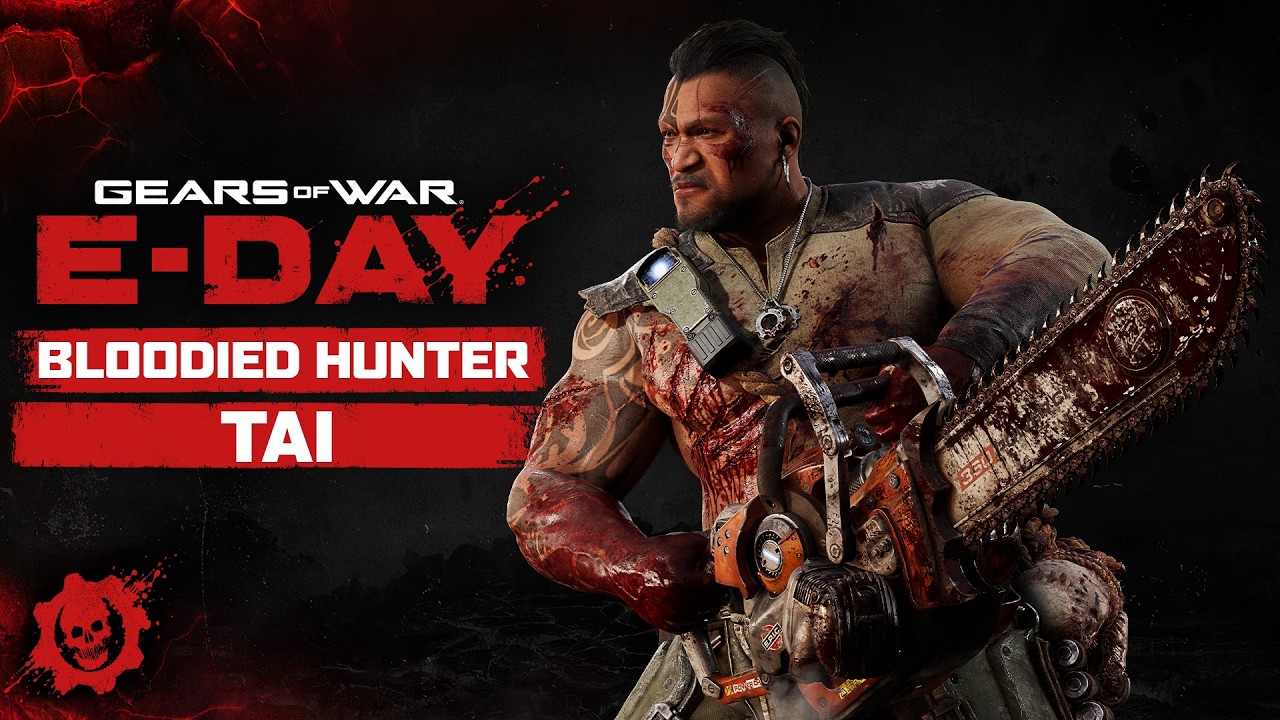
The irony of E-Day is that it's doubling down on the thing that made Gears famous while making it considerably less comfortable.
Cover remains one of the central pillars of the game. Players still need to read the battlefield, understand sightlines, and move between protected positions. But the system is also expanding with more cover types, different heights, and additional movement options.
Imagine ducking behind a wall while enemy fire pounds the position.
Suddenly, the upper section is ripped away.
In an older-style cover shooter, that might simply mean the wall has taken damage.
In E-Day, it can change what you actually do.
Your character can drop into a lower, more exposed position, forcing you to reconsider whether staying put is worth the risk.
The cover hasn't simply taken damage. Its tactical value has changed.
That's a subtle but important distinction.
Destruction Turns Cover Into a Decision
Traditional cover shooters reward memorization.
You learn the map. You learn which wall is safe. You learn which corner gives you the perfect angle. Eventually, a battlefield becomes a collection of reliable defensive positions.
Destruction threatens that certainty.
If incoming fire can compromise your protection, then asking "Where should I take cover?" isn't enough.
You also have to ask:
- How long will this cover remain useful?
- Where can I move if it collapses?
- Which enemy can destroy it?
- Is staying here safer than making a risky push?
- What position will I need after this one disappears?
That creates a different kind of tension.
The game becomes less about finding the perfect defensive position and more about anticipating when that position will stop being useful.
Because Gears has always been about controlling space.
Now, controlling space may also mean knowing when to abandon it.
Unreal Engine 5 Makes the Battlefield Feel Alive
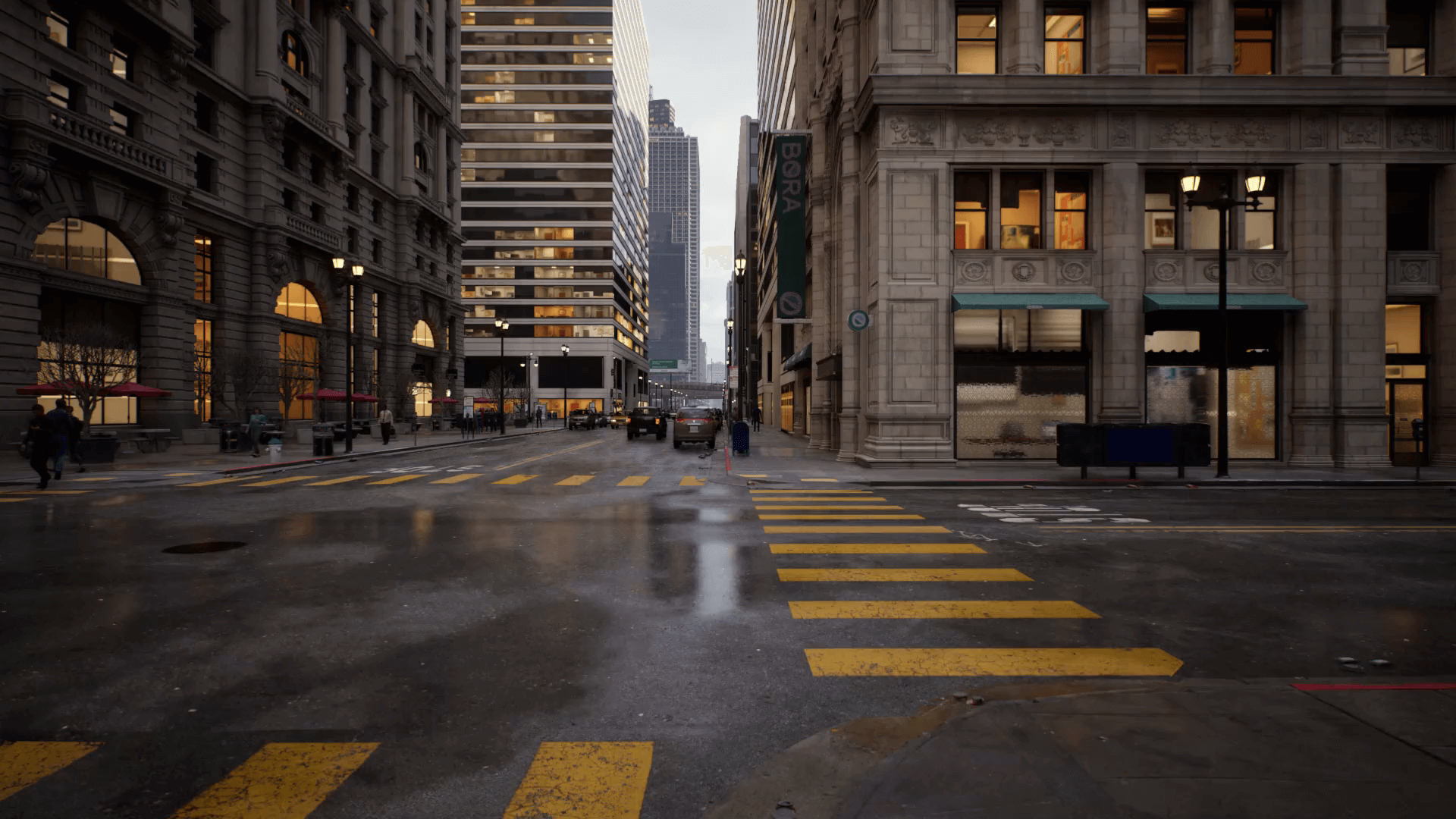
It's tempting to reduce the technical story to "UE5 makes destruction look better."
That's not really the interesting part.
The bigger opportunity is how the technology can connect destruction to gameplay.
Imagine fighting through a city where buildings, walls, vehicles, and other environmental elements aren't simply background decoration. Damage can alter the spaces you're using, expose new sightlines, block existing routes, or force you into a completely different position.
You're not just destroying a level. You're watching a place fall apart around you.
That distinction can make the world feel less like a collection of combat arenas and more like a battlefield.
And it fits E-Day's story perfectly.
This is the beginning of the Locust invasion. The world isn't supposed to feel stable.
It's supposed to feel like it's collapsing.
The Locust Don't Give You Time to Admire the Physics
Of course, none of this matters if the player can simply stand around watching buildings collapse.
That's where the Locust come in.
The invasion itself is designed to generate chaos. Enemies can emerge from underground, structures can collapse, smoke can fill an area, and the battlefield can quickly become difficult to read.
That creates a nasty combination:
Your enemies are attacking you while your battlefield is changing underneath you.
A piece of cover disappears.
A new enemy enters.
Smoke blocks a sightline.
A route becomes inaccessible.
Another route opens.
Suddenly, the fight you understood five seconds ago isn't the fight you're dealing with anymore.
That's the potential of E-Day's sandbox.
Mobility Becomes Survival
This is where E-Day could fundamentally change the feel of a cover shooter.
Historically, mobility in Gears has often meant moving between cover positions.
Now it appears increasingly important to move because of what is happening to those positions.
The game expands the movement possibilities around the familiar heavy, deliberate feel of a Gears soldier. Vaulting, sliding, jumping, and repositioning become more important when the battlefield itself refuses to remain static.
That creates a fascinating relationship between movement and destruction.
Destruction makes staying still more dangerous.
Movement gives you options.
But movement also exposes you.
So the player is constantly balancing two opposing instincts:
"Stay behind cover."
and
"Get out before this cover kills you."
That's a much more dynamic version of the classic Gears equation.
The Battlefield Can Become Part of the Enemy
There's another consequence that's easy to overlook.
In a traditional shooter, enemies are dangerous because of what they do.
In a more systemic sandbox, the environment can amplify their threat.
A Locust attack doesn't necessarily need to kill you directly. It can force you away from your defensive position, destroy the route you intended to use, or create an opening for another enemy.
The environment becomes an accomplice.
And that could make familiar enemies feel more dangerous without simply giving them more health or bigger weapons.
A powerful enemy destroying your cover is effectively attacking you twice.
First, it damages your defenses.
Then, it changes the decisions available to you.
That's a far more interesting form of pressure than simply increasing enemy damage.
It's More Than Destruction. It's Information.
The smartest part of this system may ultimately be how it changes what players read.
Good Gears players already scan a battlefield for cover, enemies, weapons, and escape routes.
With dynamic destruction, they'll also have to read the condition of the battlefield.
A wall with only a small amount of protection left isn't just scenery.
It's a timer.
A collapsing building isn't just visual spectacle.
It's a warning.
A newly opened route isn't just decoration.
It's an opportunity.
That turns environmental destruction into gameplay information.
And that's the difference between a game that looks dynamic and one that actually plays dynamically.
Analysis / Why It Matters
Gears of War helped establish the modern cover shooter, so E-Day has an interesting problem.
How do you modernize a formula that already works without destroying its identity?
The answer may be surprisingly simple:
Don't remove the cover. Make players think harder about it.
That's a smart direction.
The game doesn't need to abandon the fundamental Gears pillars of movement, cover, weapons, and enemies. Instead, it can expand the number of things that can happen around those pillars.
For years, cover shooters have largely treated environments as fixed tactical puzzles. Developers carefully position walls, vehicles, barriers, and other objects, and players learn how to exploit them.
A more dynamic approach makes those puzzles less predictable.
You aren't just solving the level.
You're adapting to it.
That's potentially a major evolution for the genre.
The most exciting possibility is the combination of authored spectacle, systemic destruction, and player mobility.
A collapsing building can still be a carefully designed cinematic moment.
But if that destruction also changes the player's tactical options, it becomes something more than a cutscene with debris.
It becomes gameplay.
What Happens Next?
The real test will come when players have spent dozens of hours inside E-Day's combat system.
Will destruction remain strategically meaningful, or will players eventually discover a handful of reliable positions and ignore everything else?
Will movement feel like a genuine expansion of the Gears formula, or simply a faster way to reach the next piece of cover?
And perhaps most importantly:
Will players actually feel forced to move?
If the answer is yes, E-Day could accomplish something surprisingly difficult.
It could preserve the identity of a game famous for hiding behind walls while making players increasingly uncomfortable about staying behind them.
The bigger question is whether other developers will follow.
If E-Day proves that destructible environments can genuinely improve tactical gameplay, future cover shooters may have less reason to build battlefields out of permanent, indestructible walls.
Instead, the best cover might be the cover that won't be there forever.
🎮 The Bottom Line
Gears of War: E-Day isn't trying to make cover obsolete.
It's making permanent cover obsolete.
That's a subtle distinction, but potentially a transformative one.
If the battlefield can collapse, routes can change, smoke can obscure sightlines, and Locust forces can erupt into spaces you thought were secure, then survival becomes less about finding the perfect position and more about knowing when to leave it.
Unreal Engine 5 may provide the technology, but the real innovation is what The Coalition can do with it:
turning the battlefield from a static shield into a living, collapsing part of the fight.
And when the Locust Horde is coming through the ground, that might be exactly what a modern Gears game needs.
What do you think? Would dynamic destruction make you more willing to keep moving in a Gears game, or do you still want the classic satisfaction of finding one perfect piece of cover and holding the line? Let us know in the comments.

Comments
Sign in to join the conversation
Sign inNo comments yet
Be the first to share your thoughts!