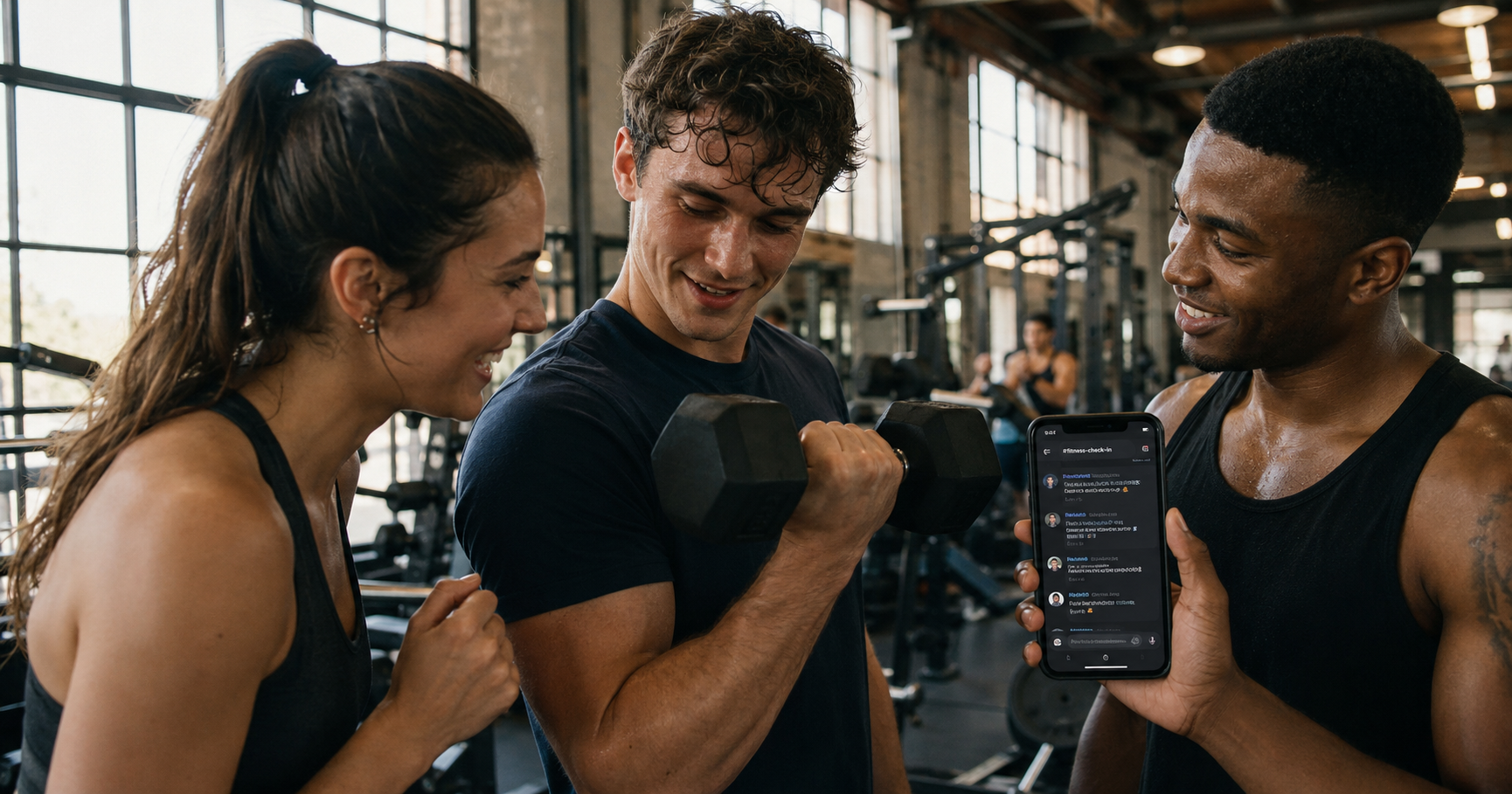

Fitness Accountability Servers on Discord: Do They Actually Work?
You've tried going to the gym alone. Downloaded workout apps. Set alarms. Promised yourself, "This time I'll stay consistent."
Then, somewhere around week three, life gets busy, motivation fades, and the routine quietly disappears.
That's usually when someone suggests joining a fitness accountability Discord server—a community where people check in daily, share progress, encourage each other, and help everyone stay on track.
It sounds almost too simple.
But the psychology behind accountability suggests otherwise.
When designed well, fitness accountability communities can be one of the most effective ways to build long-term consistency—not because they create motivation, but because they create commitment.
What Is a Fitness Accountability Discord Server?
A fitness accountability Discord server is a community built around one goal: helping members stay consistent with their health and fitness habits.
Most servers include:
- Daily workout check-ins
- Goal tracking
- Nutrition discussions
- Progress updates
- Weekly or monthly challenges
- Community support and accountability
Some are small groups of 30–50 active members, while others have thousands of people using bots, coaches, and organized fitness channels.
Regardless of size, the idea remains the same:
Show up. Share your progress. Stay accountable. Repeat.
Why Do Fitness Accountability Servers Work?
The biggest misconception is that these communities increase motivation.
They don't.
Instead, they rely on psychological principles that make consistency much easier.
1. The Hawthorne Effect
People naturally perform better when they know someone is watching.
When you post your workout in a Discord check-in channel, you're no longer exercising only for yourself.
You're reporting to a community.
Even simple reactions, replies, or acknowledgements create enough social awareness to increase follow-through compared to tracking workouts privately.
2. Public Commitment Builds Identity
Every workout check-in reinforces an identity:
"I'm someone who doesn't skip training."
The more consistently you post, the stronger that identity becomes.
Eventually, missing workouts feels uncomfortable—not because someone forces you to train, but because it no longer matches the person you've publicly become.
This is one reason public accountability consistently outperforms private goal tracking.
3. Social Rewards Create Habits
After posting a workout, someone might:
- React with an emoji
- Congratulate your progress
- Ask how today's session went
- Celebrate your streak
Those unpredictable moments of encouragement activate the brain's reward system.
Over time, checking in becomes part of the habit loop—not because you're chasing likes, but because your brain begins associating consistency with positive social feedback.
What Research Says About Social Accountability
Research has repeatedly shown that people are more likely to stick with health goals when they share them with others.
Studies have found that individuals who pursue fitness goals alongside supportive groups consistently achieve better long-term adherence than those working alone.
Similarly, group-based weight-loss programs often outperform solo programs, even when participants follow the same nutrition and exercise plans.
The common factor isn't the workout itself.
It's the accountability created by a supportive social environment.
Fitness Discord servers simply bring that structure online.
When Fitness Accountability Servers Don't Work
Not every server delivers meaningful accountability.
Here are the biggest reasons they fail.
Communities That Feel Too Big
A server with thousands of members can quickly become overwhelming.
If your check-in disappears within seconds and nobody notices whether you're active, the accountability loop breaks.
Smaller communities—typically between 20 and 200 active members—often build stronger relationships and better long-term consistency.
Endless Positivity Without Accountability
Encouragement is valuable.
Blind praise isn't.
If every post receives the same reactions regardless of effort, accountability slowly disappears.
Great communities celebrate success while also checking in when someone suddenly stops showing up.
No Structure
A random fitness chat isn't an accountability system.
The best communities create routines with dedicated channels for:
- Daily check-ins
- Goal setting
- Progress tracking
- Weekly challenges
- Nutrition
- Support during setbacks
Structure creates habits.
Chaos creates inactivity.
Talking More Than Training
It's surprisingly easy to mistake discussion for progress.
Spending an hour debating workout splits isn't the same as completing today's workout.
A fitness Discord should support your training—not replace it.
What Makes a Great Fitness Accountability Server?
The best servers combine structure with supportive moderation.
Essential Channels
A well-organized server usually includes:
Daily Check-ins
Log your workout every day.
Goals
Share 30-day or 90-day fitness targets publicly.
Progress Photos
Track visible improvements over time.
Nutrition
Discuss meals, calories, recipes, and healthy habits.
Workout Plans
Share routines and training advice.
Wins
Celebrate milestones, no matter how small.
Struggles
A dedicated place where members can honestly discuss setbacks without judgment.
Signs of Good Moderation
Strong communities usually have moderators who:
- Notice when regular members disappear
- Reach out instead of criticizing
- Organize weekly or monthly challenges
- Maintain a respectful environment
- Prevent body shaming and unhealthy advice
Good moderation creates trust.
Trust creates consistency.
Why Streaks Work So Well
Many Discord fitness communities use bots to track daily check-ins.
A visible streak—30 days, 60 days, or even 100 days—becomes surprisingly powerful.
Psychologists call this loss aversion.
People dislike losing something they've already earned.
Once you've built a long check-in streak, you're much more likely to complete today's workout simply because you don't want to reset your progress.
Fitness Accountability Server vs Personal Trainer
These aren't competitors.
They solve different problems.
| Personal Trainer | Accountability Server |
|---|---|
| Expert coaching | Daily consistency |
| Exercise programming | Social accountability |
| Form correction | Community support |
| Personalized feedback | Peer motivation |
| Scheduled sessions | 24/7 encouragement |
Many people benefit from using both together.
A trainer teaches what to do.
An accountability community helps ensure you actually do it.
How to Get the Most From a Fitness Accountability Server
To maximize results:
- Check in at the same time every day to build routine.
- Share specific updates, not just "Workout done."
- Support other members, not only yourself.
- Be honest about missed days instead of disappearing.
- Commit for at least 90 days before judging whether the community works.
Consistency compounds over time.
The Honest Verdict
So, do fitness accountability Discord servers actually work?
Yes—when they're built around real accountability.
The best communities are:
- Small enough to feel personal
- Structured enough to create habits
- Honest enough to encourage improvement
- Active enough that people notice your absence
They don't magically create motivation.
They create an environment where showing up becomes the easiest choice.
The difference between a life-changing community and a forgotten Discord server isn't the platform.
It's the people, the structure, and the culture.
Final Thoughts
If consistency has always been your biggest challenge, joining a structured fitness accountability community is worth trying.
The investment is minimal.
The potential upside is enormous.
At worst, you spend a few weeks in a community that isn't the right fit.
At best, you find a group that helps you build the one habit that matters more than any workout plan or diet:
Showing up—every single day.

Comments
1Sign in to join the conversation
Sign in