
🌐 What Is Dual-Reality VTubing?
VTubing has always been about hiding the creator behind a digital character.
But a new style of content is beginning to blur that boundary.
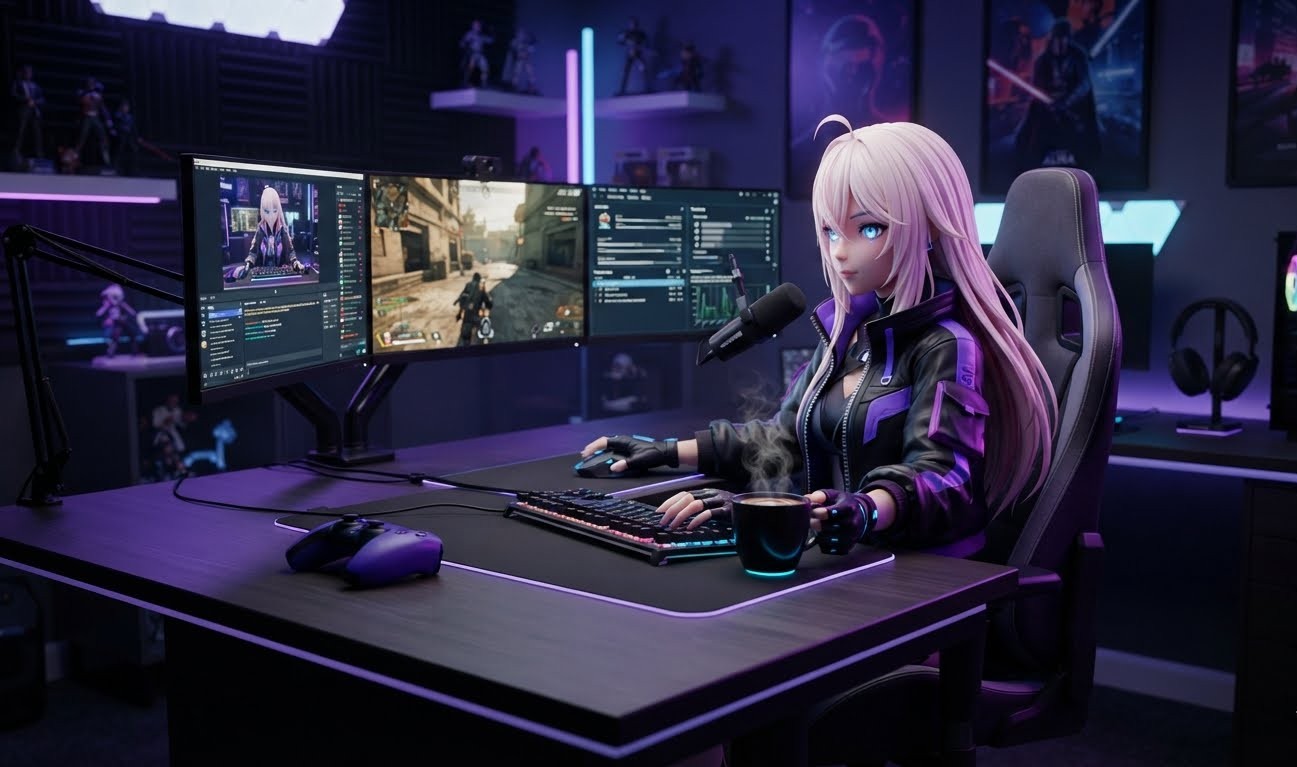
Dual-Reality VTubing combines a fully animated 3D avatar with a real-world environment.
Instead of placing the avatar inside a completely virtual room, creators can keep their real desk, microphone, keyboard, drinks, instruments, collectibles, and other objects visible.
The avatar remains animated.
The physical world remains real.
The result is a hybrid broadcast where virtual and physical elements share the same scene.
This idea is closely related to augmented and mixed reality. AR places digital elements into a real environment, while more advanced systems can track the relationship between virtual and physical objects. Research into physical-virtual interaction has explored exactly this kind of object tracking and spatial interaction.
And in 2026, the tools for VTubers are becoming more accessible.
🟣 Why VTubers Are Bringing the Real World Back
Traditional VTubing often uses a virtual background.
The creator might appear inside:
- A bedroom
- A gaming room
- A fantasy world
- A futuristic spaceship
- A virtual studio
That gives creators enormous creative freedom.
But it also creates a limitation.
Real objects become difficult to use naturally.
Imagine a VTuber reaching for a real water bottle.
If the avatar is completely virtual, the bottle may appear behind the character.
The hand might not line up with it.
The avatar may look like it is grabbing empty space.
Dual-Reality VTubing tries to solve that problem.
The creator can remain represented by a 3D avatar while the camera sees the real desk and physical objects around them.
That makes ordinary actions suddenly become content.
🧠 How AR Makes Physical Objects Work
The key is tracking.
A VTuber setup needs to understand where the creator and important objects are located.
Different parts of the system can track:
- Face position
- Head movement
- Body movement
- Hands
- Camera position
- Physical objects
- Virtual props
Warudo, for example, supports a wide range of motion-capture systems, including webcams, iPhones, SteamVR, Leap Motion, Sony Mocopi, Rokoko and other external tracking systems.
Its iPhone tracking options can use ARKit-based facial tracking, including 52 ARKit blendshapes for expressions and head movement.
That means the avatar can respond naturally to the creator's movements.
But object tracking is where things become much more interesting.
🧩 From Virtual Props to Real Objects
VTubers already have virtual props.
Software such as VTube Studio supports an item system that allows creators to attach images, animations and customizable props to their Live2D models. It also supports webcam and mobile face tracking and hand tracking.
But there is a major difference between a virtual prop and a physical prop.
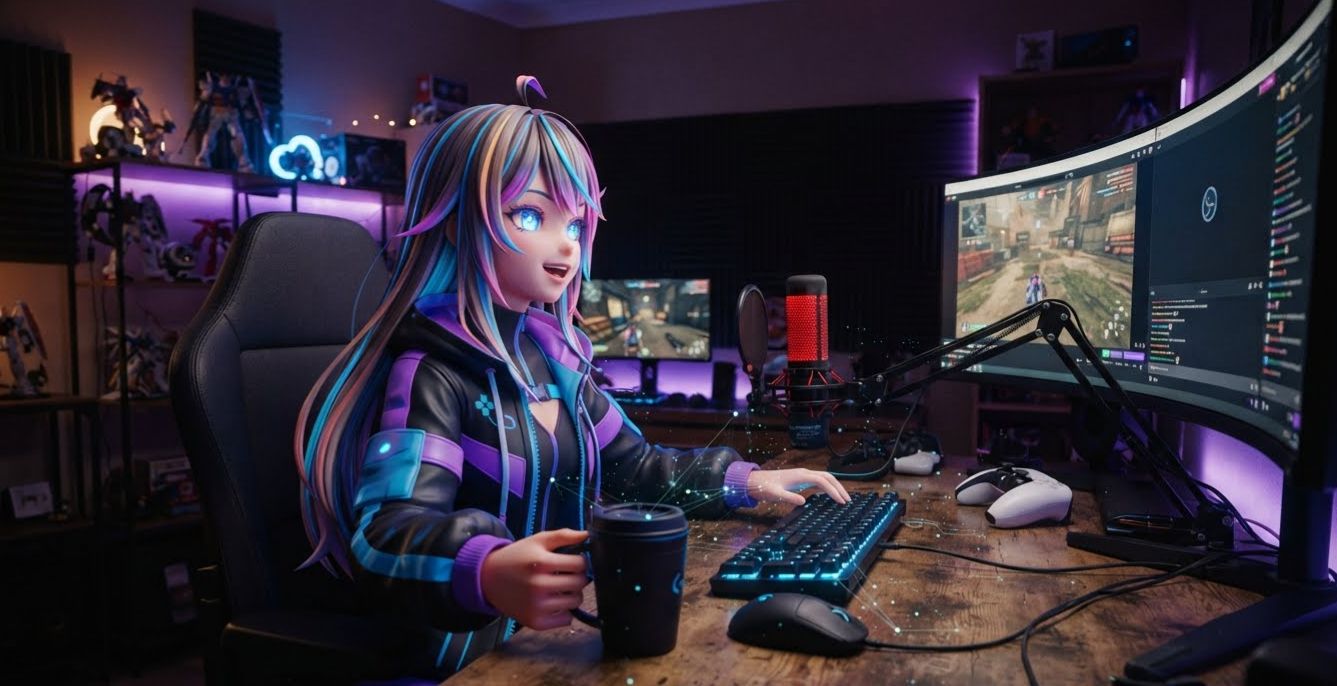
A virtual coffee cup can simply be attached to an avatar's hand.
A real coffee cup has to exist in three-dimensional space.
The system needs to understand:
Where is the cup?
Where is the hand?
How does the hand move around the cup?
Which object is being held?
Should the cup appear in front of or behind the avatar?
This is why physical object tracking is significantly more complicated than simply adding a digital prop.
Community discussions around VTuber technology have highlighted the same challenge: tracking real objects independently can require dedicated trackers or computer-vision approaches, especially when objects move or become partially hidden.
⚙️ The Technology Behind the Avatar
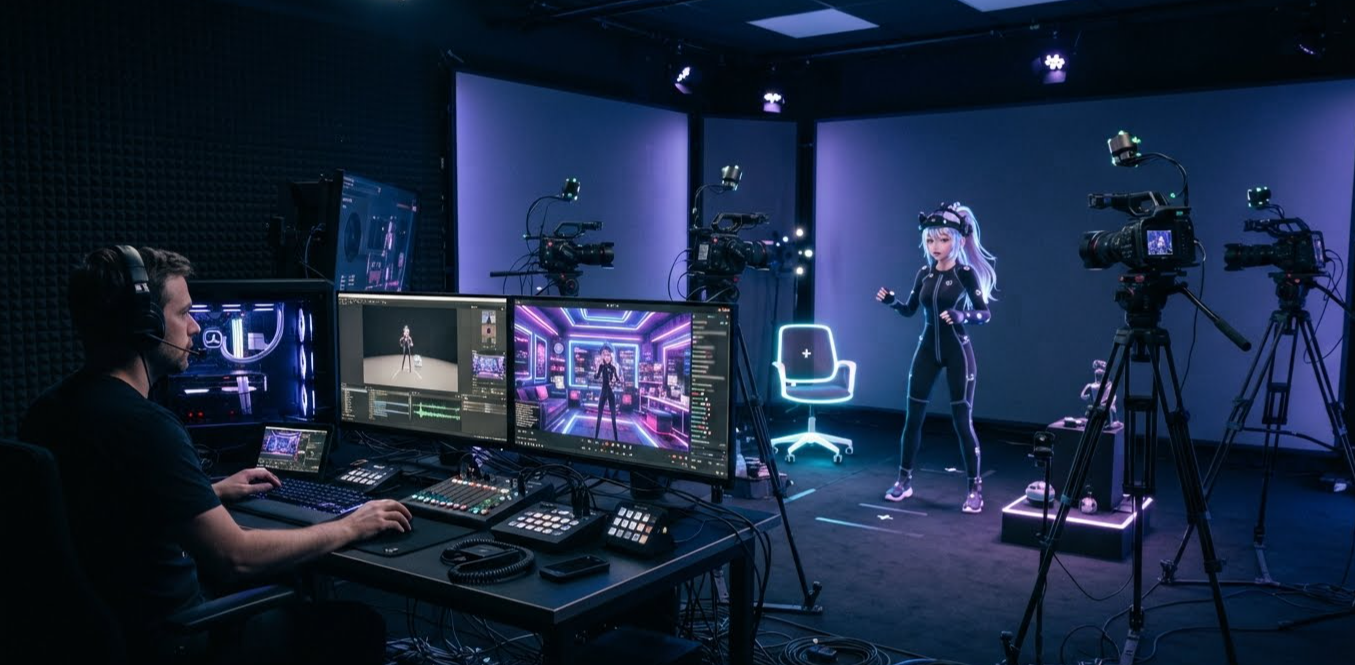
A convincing Dual-Reality VTubing setup can involve several layers.
1. Face Tracking
The creator's facial movements control the avatar's expressions.
Technologies such as ARKit can provide detailed facial tracking.
Warudo supports ARKit-based tracking through compatible iOS devices.
2. Body Tracking
The system tracks the creator's body.
This can involve:
- Webcam tracking
- VR trackers
- Mocap suits
- Hand tracking
- Motion sensors
3. Object Tracking
This is the exciting part.
A tracker can be attached to an object.
The software then knows where that object is located.
4. Camera Tracking
The camera also needs to understand its position.
Without this, virtual and physical objects can appear disconnected when the camera moves.
5. Compositing
Finally, everything needs to be combined.
The final frame contains:
Real environment + 3D avatar + tracked objects + lighting + effects
That is what creates the illusion that the avatar actually exists inside the creator's room.
🔗 INTERNAL LINK #1
Add an internal link here:
Complete VTuber Streaming Setup Guide
Use this as a natural connection to your VTuber setup content.
🎥 Why This Could Change VTuber Content
Dual-Reality VTubing isn't simply a technical trick.
It changes what creators can do on stream.
Consider a normal gaming stream.
The avatar talks.
The creator plays a game.
The audience watches.
Now imagine the same creator physically picking up a controller, showing a collectible, opening a package, drinking from a cup, drawing on paper, or interacting with a musical instrument.
The avatar can remain visible throughout the interaction.
That makes the stream feel more spontaneous.
The creator is no longer trapped inside a completely virtual environment.
💡 New Content Possibilities
🎮 Gaming
A VTuber could physically interact with:
- Controllers
- Gaming accessories
- Collectibles
- Consoles
- Physical game boxes
🍳 Cooking
A creator could show real ingredients and cooking equipment while their avatar remains the main character.
🎨 Art
A VTuber could draw on a real tablet or canvas while the avatar reacts to the process.
📦 Unboxing
Imagine an animated character opening a real package.
The physical product remains visible.
The avatar provides the personality.
🎸 Music
A creator could play a real instrument while their virtual character remains on screen.
This creates a very different visual identity from conventional VTuber streams.
📈 The Creator Advantage
This technology could be particularly useful for mid-sized VTubers.
Large agencies can afford sophisticated motion capture studios.
Independent creators usually cannot.
But the technology ecosystem is becoming more flexible.
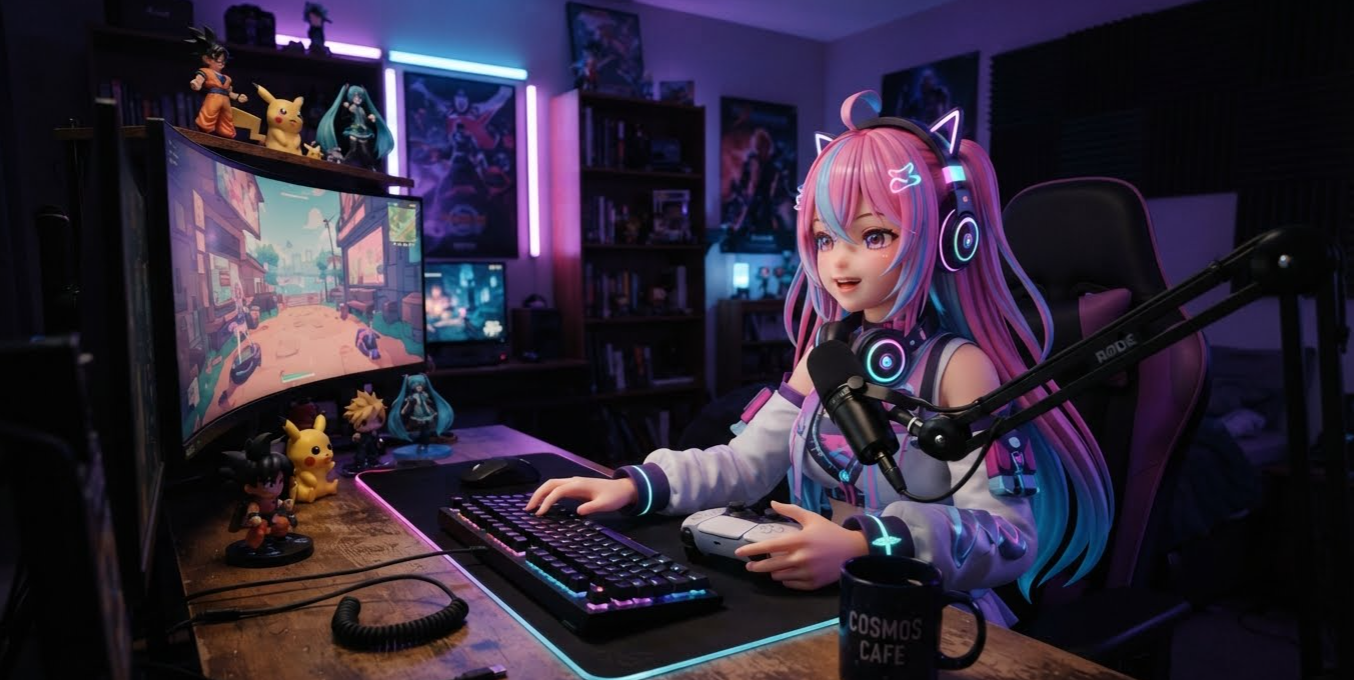
Warudo supports everything from webcam-based tracking to professional motion-capture systems. Its documentation recommends webcam-based MediaPipe tracking as a starting point for new 3D VTubers and supports more advanced tracking systems for creators who want higher quality.
That creates a potential progression:
Beginner
Webcam → Face tracking → 3D avatar
Intermediate
Webcam + hand tracking → More interaction
Advanced
iPhone + body tracking + tracked props → Mixed reality
Professional
Full mocap + camera tracking + dedicated object tracking → Production-quality broadcast
Creators do not necessarily need to jump directly to the most expensive setup.
🔗 INTERNAL LINK #2
Add:
Discord AI Tools for Content Creators
You can use this internal link when discussing how creators can automate community management while focusing on production.
⚠️ The Biggest Technical Challenges
Dual-Reality VTubing looks simple when it works.
Behind the scenes, it can be extremely complicated.
Object Occlusion
The software needs to know whether the virtual avatar should appear:
In front of the object
or
Behind the object.
Getting this wrong instantly breaks the illusion.
Tracking Accuracy
Even a small tracking error can make an avatar's hand appear several centimeters away from a real object.
That can make grabbing and holding look unnatural.
Lighting
Real rooms have constantly changing lighting.
The virtual character needs lighting that matches the environment.
Otherwise, the avatar can look pasted onto the footage.
Camera Movement
Moving the camera creates another challenge.
The virtual character needs to stay locked to the physical environment.
Hardware Cost
Professional tracking systems can become expensive quickly.
Consumer webcams and phones are much more accessible, but they cannot always deliver the same level of spatial tracking.
🔗 INTERNAL LINK #3
Add:
Discord Streaming Guide: How Creators Can Build a Community
This gives readers another relevant page while also helping your internal-link SEO score.
📊 DUAL-REALITY VTUBING TECHNOLOGY STACK
| Layer | Purpose |
|---|---|
| 3D Avatar | Represents the creator |
| Face Tracking | Controls expressions |
| Body Tracking | Controls movement |
| Hand Tracking | Enables physical interaction |
| Object Tracking | Tracks real props |
| Camera Tracking | Keeps virtual elements aligned |
| AR/MR Compositing | Combines real and virtual elements |
| OBS/Streaming Software | Sends the final broadcast |
Chart Title
How a Dual-Reality VTuber Setup Works
Chart Caption
Multiple tracking and rendering layers work together to connect the virtual avatar with the physical environment.
🧪 The "Dual-Reality" Meta Is Still Emerging
It is important not to overstate where the technology currently stands.
Dual-Reality VTubing is better described as an emerging production style than a standardized new VTuber category.
The technology already exists in different forms.
For example, VTOKU Cam currently promotes real-time AR VTubing that can place a VRM avatar into a real environment, with LiDAR tracking and masking on supported devices.
Warudo supports extensive motion-capture integrations for 3D VTubing.
And community experimentation shows creators are actively exploring ways to connect real-world props with virtual characters.
What is changing is the combination of these technologies.
Creators are beginning to think of the physical desk itself as part of the virtual performance.
🔮 Where This Could Go Next
The next step could be much more interactive.
Imagine a VTuber whose virtual environment automatically understands the physical room.
The avatar could:
- Pick up a real cup
- Push a physical button
- Point toward a real monitor
- Hold a real product
- React to objects placed on the desk
- Use real musical instruments
- Interact with pets
- Respond to physical events
AI could make this even more interesting.
Computer vision could identify objects.
Tracking systems could follow their movement.
The avatar could then react automatically.
A physical desk would effectively become another input device.
💰 Why Brands Could Care
There is also a commercial opportunity.
Imagine a gaming company sending a VTuber a new controller.
Instead of simply showing it through a traditional webcam, the creator could integrate the physical product directly into the avatar's performance.
The virtual character could:
Pick it up → Inspect it → Demonstrate it → React to it
That creates a more memorable sponsorship.
The same idea could work for:
- Gaming hardware
- Food
- Collectibles
- Fashion
- Toys
- Technology
- Consumer products
The physical product becomes part of the character's world.
🏁 Is Dual-Reality VTubing the Next Meta?
It could be.
But the technology is still developing.
The most important change is not that VTubers are suddenly abandoning virtual worlds.
It is the opposite.
They are finding ways to bring the real world into the virtual performance.
That gives creators the best parts of both formats.
Virtual World
- Character customization
- Anime aesthetics
- Fantasy environments
- Privacy
- Digital effects
Real World
- Physical products
- Natural objects
- Real environments
- Spontaneous interactions
- Authentic demonstrations
Put them together and you get something that feels much more alive.
🚨 CALLOUT BOX
The Big Idea:
The future of VTubing may not be completely virtual. The most interesting creators could be the ones who make their digital avatars understand and interact with the real world around them.
🏆 FINAL VERDICT
Dual-Reality VTubing represents an interesting direction for the next generation of virtual creators.
The technology already exists in pieces.
ARKit can provide detailed facial tracking. Warudo supports numerous motion-capture systems. VTube Studio provides sophisticated model and prop tools. New AR applications are also making it easier to place avatars into real environments.
The difficult part is making everything work together.
But once tracking, compositing, and object interaction become easier, the creator's physical desk could become part of the avatar's world.
That is the real promise of Dual-Reality VTubing.
The next generation of VTubers may not ask:
"How do I hide the real world?"
They may ask:
"How can my avatar interact with it?"
🔗 INTERNAL LINKS FOR YOUR CMS
Use these naturally inside the article:
- Complete VTuber Streaming Setup Guide
- Discord AI Tools for Content Creators
- How to Stream on Discord: Complete Streaming Guide
These give the article 3 internal links, which should address the “0 links to your own pages” issue shown in your SEO checker.
🌐 EXTERNAL SOURCES
For credibility, link to:


Comments
Sign in to join the conversation
Sign inNo comments yet
Be the first to share your thoughts!