
Cyberpunk Orion's Multiplayer Pivot: What We Learned From the Weekend Leaks
Cyberpunk 2077's biggest missing feature might finally be coming back.
A fresh wave of datamined material surfaced over the weekend.
It points to something CD Projekt Red has danced around for years: real, structured multiplayer built into the sequel, codenamed Orion.
This time, the details go further than a vague job listing.
They point toward a persistent online hub sitting alongside the single-player campaign.
The Trend: A Feature That Refused to Die

Multiplayer has haunted Cyberpunk 2077 since before launch.
The original game was supposed to ship with an online mode.
CD Projekt Red scrapped it during the game's troubled 2020 release, choosing to focus entirely on stabilizing the single-player experience instead.
That decision made sense at the time.
But the ambition never fully disappeared.
A Quick Timeline
Multiplayer's on-again, off-again history:
- 2020: Original Cyberpunk 2077 multiplayer scrapped before launch due to development issues
- 2021: Datamined files from a major update revealed an internal "CyberpunkMulti" reference, hinting the idea wasn't fully dead
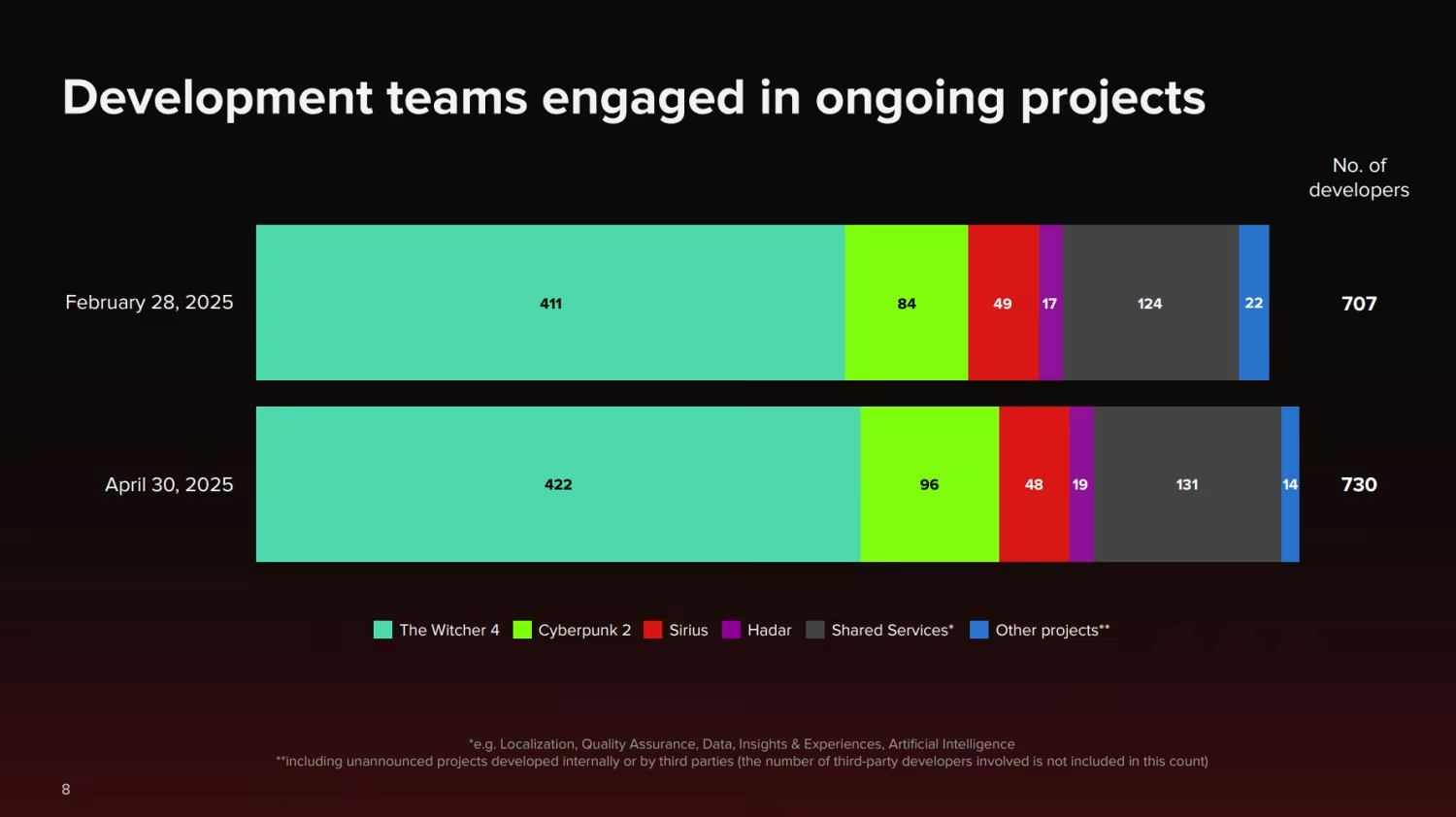
- 2024: Job listings for Project Orion specifically mention systems "compatible with both solo and multiplayer modes"
- 2025: A CD Projekt Red job posting explicitly seeks a Lead Network Engineer for the Cyberpunk sequel, confirming online infrastructure work is underway
- This weekend: A fresh datamine reportedly reveals structural details about a persistent hub system
That pattern shows a studio that never fully let go of the idea.
Even while publicly staying quiet about it.
What the Weekend Datamine Reportedly Reveals
Community breakdowns of the leaked files describe something more concrete than prior leaks.
This time it's actual system architecture, not just hints at intent.
Key details reportedly found in the datamined material:
- References to a persistent online hub space, separate from the main single-player campaign
- Peer-to-peer networking architecture with host authority
- Matchmaking-related code, suggesting structured player grouping
- Asset references pointing to shared social spaces outside of mission content
Why the Peer-to-Peer Detail Matters
That networking detail is a particularly interesting callback.
Similar peer-to-peer references appeared in datamined Cyberpunk 2077 files years ago, tied to the originally cancelled online mode.
Seeing that same architecture resurface in Orion's files suggests something specific.
CD Projekt Red may be building on ideas from that earlier scrapped project, rather than starting from zero.
Note: Datamined files reveal what exists in a game's code, not necessarily what will ship in the final product. Features get built, tested, and cut constantly during development. A persistent hub referenced in a datamine is real evidence of active development, not a guarantee it survives to launch.
Why a Persistent Hub Makes Sense for Orion
A full always-online multiplayer mode would be a massive departure for CD Projekt Red.
A persistent hub is a much smaller, more measured step.
Reasons a hub-style approach fits Orion's broader direction:
- Lets players interact socially without disrupting the core single-player narrative
- Mirrors structures used successfully in other genre-blending RPGs
- Gives CD Projekt Red a testing ground for online infrastructure without committing to a full standalone product
- Aligns with earlier comments framing multiplayer as a "big production," possibly separate from the main game
The CEO Comment That Started It All
That last point traces back to something CD Projekt's own CEO said years ago.
He described Cyberpunk multiplayer as substantial enough to potentially exist as its own product, not a simple mode bolted onto the sequel.
A persistent hub threads that needle.
It's online functionality, without necessarily becoming the standalone spin-off previously rumored.
The Budget and Timeline Reality Behind This Pivot
Multiplayer ambitions don't come free.
That cost appears to be reshaping Orion's entire release timeline.
What the budget and timeline pressure reportedly looks like:
- Orion's budget has grown substantially compared to original single-player-only estimates
- Reports point to a release window as far out as Q4 2030, coinciding with Cyberpunk 2077's tenth anniversary
- The extended timeline is attributed specifically to multiplayer integration work
- CD Projekt Red has not publicly confirmed this timeline
Reading Between the Lines
That 2030 window, if accurate, would make Orion one of the longest development cycles in the studio's history.
For a company still recovering from Cyberpunk 2077's rocky launch, that reads less like corporate indecision.
It reads like deliberate caution.
Nobody at CD Projekt Red wants a repeat of 2020.
How Fans Are Reacting to the Leak
Community reaction has been split.
Not entirely along predictable lines, either.
Common reactions circulating since the weekend leak:
- Excitement from players who felt Cyberpunk's original scrapped multiplayer was a missed opportunity
- Concern that a persistent hub could pull resources away from the single-player campaign's depth
- Skepticism about the reported 2030 release window
- Cautious optimism that a hub, rather than a full MMO pivot, keeps the core RPG experience intact
That skepticism around the timeline is probably the most grounded reaction in the mix.
Leaked release windows this far out have a long history of shifting.
Sometimes by years, as development progresses and studios adjust scope.
What This Means for Cyberpunk's Identity Going Forward
Cyberpunk 2077 built its reputation as a deeply personal, narrative-driven RPG.
Especially after years of post-launch polish turned it into a genre standout.
A persistent multiplayer hub doesn't have to threaten that identity.
But it does raise real questions.
Open questions heading into more official reveals:
- Will the hub feel additive, or pull focus from Orion's main campaign
- How will CD Projekt Red balance online costs against single-player polish
- Does a hub risk fragmenting the community between engaged and uninterested players
- Will this layer ship at launch, or arrive later as a post-launch addition
None of these questions have confirmed answers yet.
Reading the Silence
CD Projekt Red has stayed largely quiet publicly.
Job listings, datamines, and internal leaks are doing the talking so far, not a formal announcement.
That pattern is likely to continue for a while.
Studios rebuilding trust after a rocky launch tend to over-communicate on polish. They under-communicate on ambitious new systems until those systems are far enough along to survive public scrutiny.
How This Compares to Other Studios
CD Projekt Red isn't the first single-player-focused studio to flirt with online features.
Looking at similar experiments elsewhere offers a useful lens for judging Orion's chances.
Patterns worth watching, based on other studios' pivots:
- Lightweight social hubs that don't disrupt core progression tend to land well, since players can ignore them entirely
- Forced online connectivity in previously offline experiences often triggers backlash, especially around save systems
- Successful hybrids keep multiplayer content clearly separated from the main narrative
- Studios that communicate scope early tend to manage expectations better than those relying on leaks
Why This Matters for Orion Specifically
That first point is particularly relevant here.
If the persistent space genuinely sits alongside the campaign, rather than gating story content behind it, CD Projekt Red has a much better shot at avoiding backlash.
The studio's messaging has consistently emphasized single-player storytelling as the priority.
At least publicly.
Whether that framing survives contact with an actual persistent hub system remains one of the more interesting open questions in this leak cycle.
The Business Case Behind Adding Multiplayer
Here's a basic question buried under all the technical details.
Why would CD Projekt Red take this risk at all, given how badly the original scrapped mode became a punchline during Cyberpunk 2077's launch controversy?
The answer likely comes down to modern game economics as much as creative ambition.
Financial pressures that make multiplayer attractive to single-player studios:
- Ongoing online components generate sustained post-launch revenue, not just a single upfront purchase
- Persistent spaces create natural opportunities for cosmetic sales without a full paid DLC cycle
- Player retention improves when people have a social reason to keep logging in
- Competing studios increasingly treat some connected feature as close to a baseline expectation
A Reputation Worth Protecting
None of that guarantees Orion leans heavily into monetization.
CD Projekt Red has generally avoided aggressive microtransaction strategies compared to many peers.
That reputation is part of what earned back player trust after 2020.
But the broader industry trend toward connected experiences almost certainly plays some role here.
Multiplayer never fully left the studio's roadmap, even after the original version got scrapped under intense pressure.
FAQ
What is Cyberpunk Orion? The codename for CD Projekt Red's sequel to Cyberpunk 2077, currently in extended development.
Has CD Projekt Red officially confirmed multiplayer for Orion? No. Everything so far comes from job listings, datamined files, and leaks, not an official studio announcement.
What is a persistent hub, in this context? A shared online social space separate from the main single-player campaign, allowing player interaction without turning the game into a full MMO.
When is Cyberpunk Orion expected to release? Leaked reports point to as late as Q4 2030, though CD Projekt Red hasn't confirmed any release window publicly.
Did the original Cyberpunk 2077 have multiplayer? It was planned before launch but scrapped in 2020 so the studio could focus entirely on stabilizing the single-player game.
Final Takeaway
The weekend's datamine doesn't confirm Orion is becoming a multiplayer-first game.
But it does confirm CD Projekt Red never abandoned the idea it scrapped back in 2020.
A persistent hub sitting alongside a single-player campaign is a measured, careful approach. One that lets the studio experiment with online features without risking the narrative depth that rebuilt Cyberpunk 2077's reputation in the first place.
Whether that balance holds up once more official details arrive is still an open question.