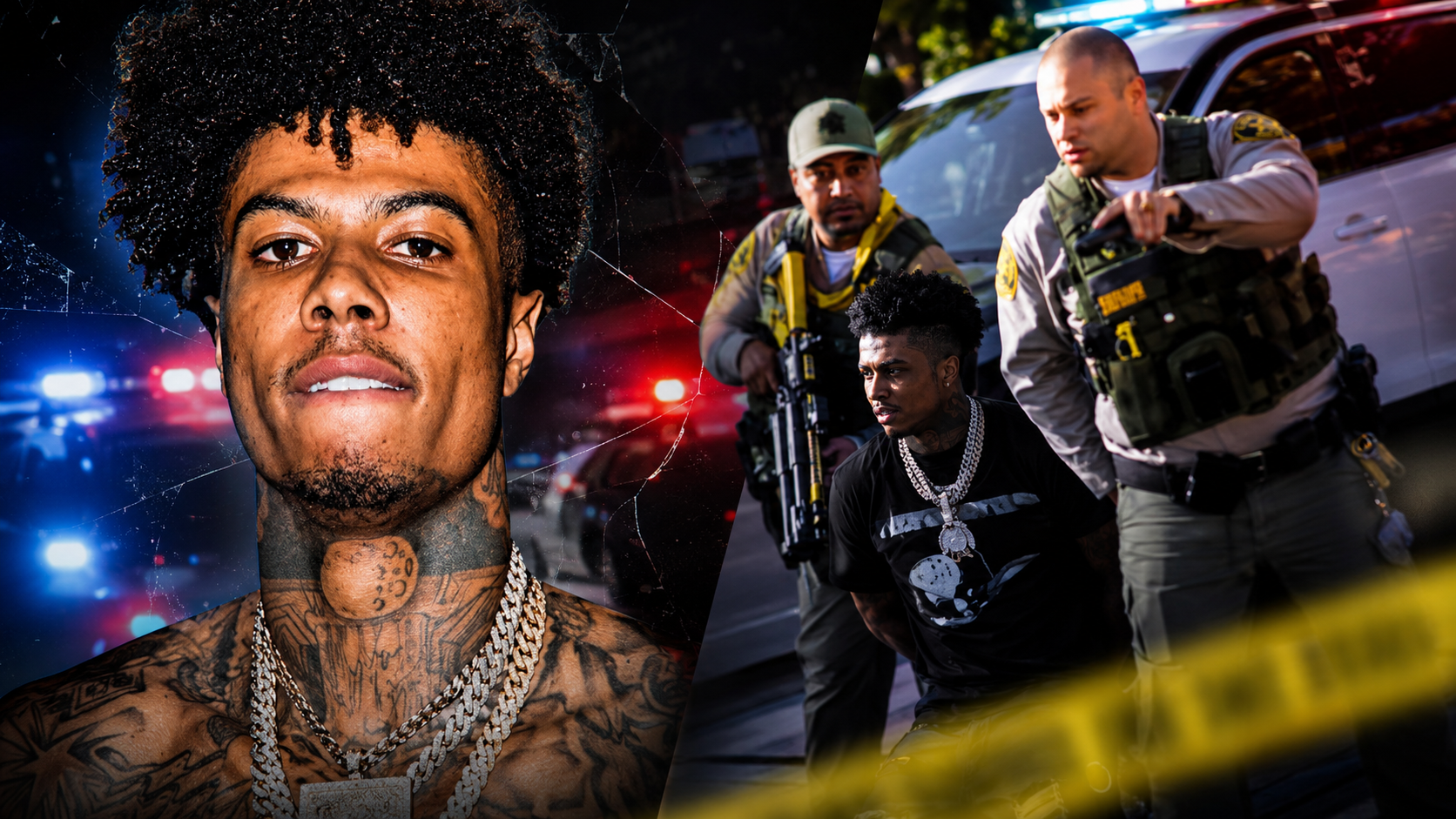

Rapper Blueface Held at Gunpoint by Police on Stream After Alleged Swatting
A livestream that started as a normal family outing turned into a tense, armed police encounter this weekend, and millions watched it unfold in real time.
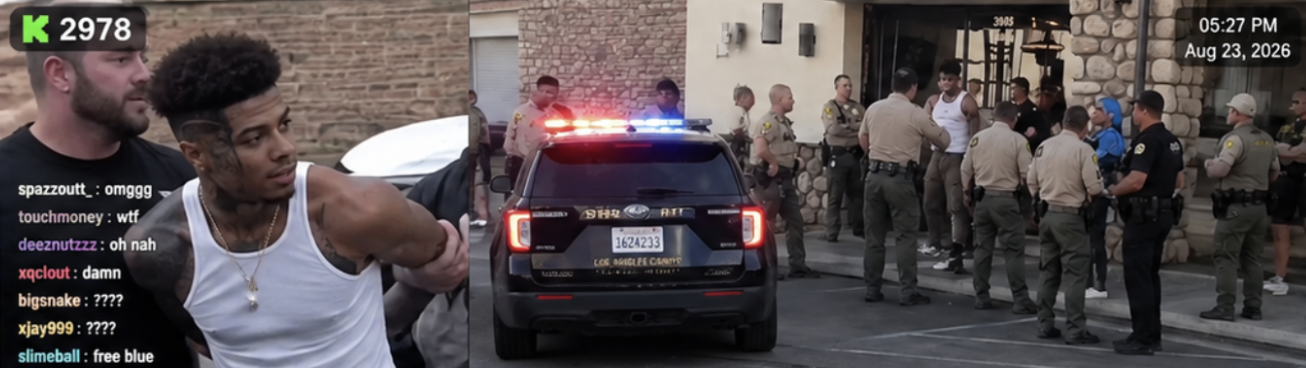
Rapper Blueface, born Johnathan Michael Porter, was detained at gunpoint on Sunday, August 23, 2026, while livestreaming from his King of Crabs restaurant in Santa Clarita Valley with girlfriend Nevaeh Akira and their newborn son. Deputies from the Los Angeles County Sheriff's Department swarmed the location after a false emergency call claimed there was a gunshot victim inside the restaurant. It turned out to be nothing. It also wasn't the first time this month.
📹 What Happened on Stream
According to HotNewHipHop's report on the incident, Blueface, Akira, and their newborn were hanging out at his restaurant when deputies arrived around 5:27 PM and ordered everyone outside with their hands raised.
Footage that quickly spread across social media showed armed officers surrounding the building, guns drawn, as Blueface complied and was placed on his knees on the pavement outside. One exchange between the rapper and an approaching officer summed up just how routine these encounters have become for him.
"I know you get swatted a lot," the officer said. Blueface replied, "Yeah, no you're good, take your time."
That level of calm from someone being held at gunpoint says a lot about how normalized this kind of incident has become for high profile streamers. Akira, still holding their newborn son, was also called outside and searched by an officer before the family was allowed to leave.
👶 Days After Welcoming Their First Child
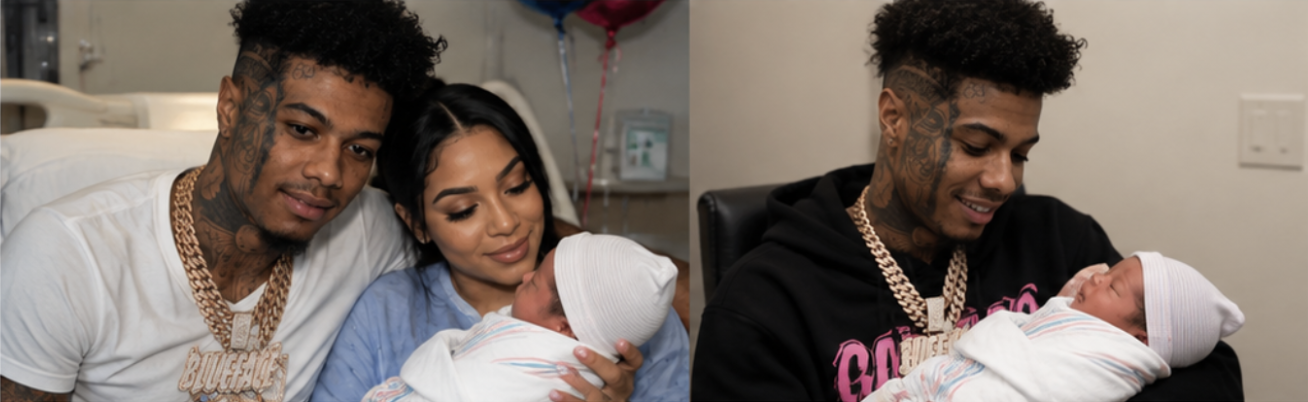
The timing made the incident especially unsettling. Blueface and Akira had welcomed their son, Johnathan Jamall Porter Jr, just days earlier on August 18, roughly five days ahead of Akira's expected due date, weighing eight pounds. The couple had shared the birth live on the streaming platform Kick, letting viewers watch as Akira went into labor and later as the couple held their newborn together on camera.
That same openness that made the birth such a widely shared moment is part of what puts the family at risk. Anyone watching the stream knew exactly where they were, what they were doing, and roughly when they'd be there, information a malicious caller could use to time a fake emergency report for maximum chaos and maximum online attention.
Once deputies confirmed there was no shooting, no injuries, and no actual threat at the restaurant, everyone at the scene was released without charges. The entire encounter, from armed officers surrounding the building to the family walking free, played out live in front of an audience that had tuned in expecting a normal stream.
🔁 This Wasn't the First Time
This is where the story gets more troubling. Sunday's incident was Blueface's second swatting call in roughly a month.
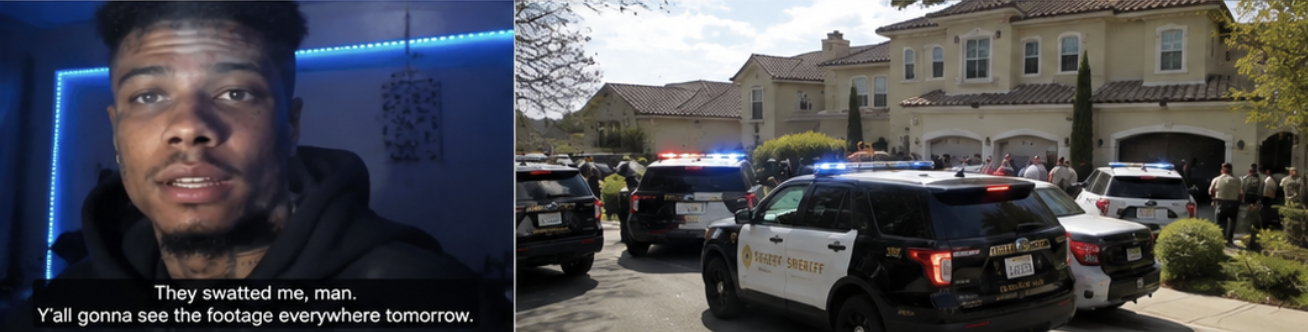
On July 21, 2026, deputies were called to his Canyon Country home after a fabricated 911 report claimed multiple people had been shot and killed inside. Blueface was livestreaming when police surrounded his house that day too, later telling his viewers on camera that they had been swatted and that the footage would "be everywhere tomorrow," a sarcastic acknowledgment of just how predictable the online reaction to these incidents has become.
That earlier incident reportedly included an even stranger twist. Child Protective Services was also contacted around the same time as the July swatting call, adding another layer of confusion and stress to an already frightening situation for the family, even though nothing about the report turned out to be true.
Two swatting incidents within a single month is a clear escalation, and it raises real questions about who is targeting the rapper, whether it's coordinated, and why his family in particular has become such a repeated target.
⚠️ What Swatting Actually Is, and Why It's So Dangerous
For anyone unfamiliar with the term, swatting is the act of making a false emergency call, often reporting a shooting, hostage situation, or murder, specifically to trigger a large, heavily armed police response at someone else's location. It's designed to sound credible to dispatchers, which means officers arrive prepared for the worst case scenario rather than a routine call.
That's exactly what makes swatting so dangerous. Officers don't know it's a hoax until they've already searched the property, sometimes with weapons drawn on people who have done absolutely nothing wrong. As IBTimes UK notes in its coverage, swatting incidents involving public figures have become a growing safety concern across the streaming world, with armed responses occasionally escalating situations that started as nothing more than a malicious phone call made from a phone or computer states away.
There's also a real financial and legal cost buried underneath the viral moment. Each swatting call triggers a full law enforcement response, tying up deputies, patrol cars, and resources that could otherwise be responding to genuine emergencies elsewhere in the county. Multiply that by the number of high profile streamers who get targeted regularly, and it becomes a public safety issue that extends well beyond the individual being pranked.
Blueface's situation adds another layer of risk that most swatting victims don't face: because he streams almost everything, including his newborn son's birth and now two separate armed police encounters, his location and daily routine are constantly visible to a massive online audience, some of whom may not have good intentions.
🎥 Streaming Culture Meets Real World Risk
Blueface has leaned heavily into full time livestreaming over the past year, broadcasting large portions of his personal life on Kick under the username bluesclues124. That openness has clearly built engagement, drama, and viral moments, but incidents like this highlight the growing tension between that level of transparency and basic personal safety.
When your location, schedule, and even your newborn child are visible to anyone watching a live broadcast, you become an easier target for exactly this kind of malicious hoax. According to Sportskeeda's coverage of the incident, Blueface has been swatted at his home before this year as well, meaning this pattern predates even the two most recent incidents.
It's also not a pattern unique to him. Swatting targeting online personalities has become disturbingly common across the streaming world in recent years, with creators on platforms like Kick, Twitch, and YouTube reporting similar incidents. The louder a creator's online presence becomes, the more predictable their whereabouts often are, and that predictability is exactly what makes swatting calls effective.
🧭 What Comes Next for Blueface and Akira
As of now, no arrests have been made in connection with either the July or August swatting calls, and authorities have not publicly named a suspect. Investigations into false emergency reports like these can be difficult to close, since callers often use spoofed numbers or anonymous services specifically designed to hide their identity from law enforcement.
For Blueface and Akira, the immediate aftermath means returning to a normal routine that no longer feels entirely safe, especially with a newborn now part of that routine. Whether the couple adjusts how much of their daily life they broadcast live remains to be seen, though given how central streaming has become to Blueface's public persona and income, a dramatic pullback seems unlikely in the short term.
🏁 Final Takeaway
Nobody was hurt in either incident, and that's the best possible outcome given how these situations can escalate. But two swatting calls in a single month is not a coincidence anyone should brush off. For Blueface, Nevaeh Akira, and their newborn son, what should have been a peaceful outing at the family restaurant instead became another viral, frightening encounter with armed police, broadcast live to millions.
As livestreaming continues to blur the line between public entertainment and private life, incidents like this are a stark reminder that the risks aren't just theoretical. They're playing out in real time, on camera, for the people who choose to share their lives online, and for now, there's no clear sign the calls are going to stop.
Comments
2Sign in to join the conversation
Sign in