

AI Smart Glasses Are Replacing Smartphones Is This the Future?
Imagine walking down the street and receiving a message. Instead of pulling out your phone, unlocking it, opening an app, and typing a reply, you simply hear the message in your ear and respond with your voice in seconds—without slowing down or looking away from the road.
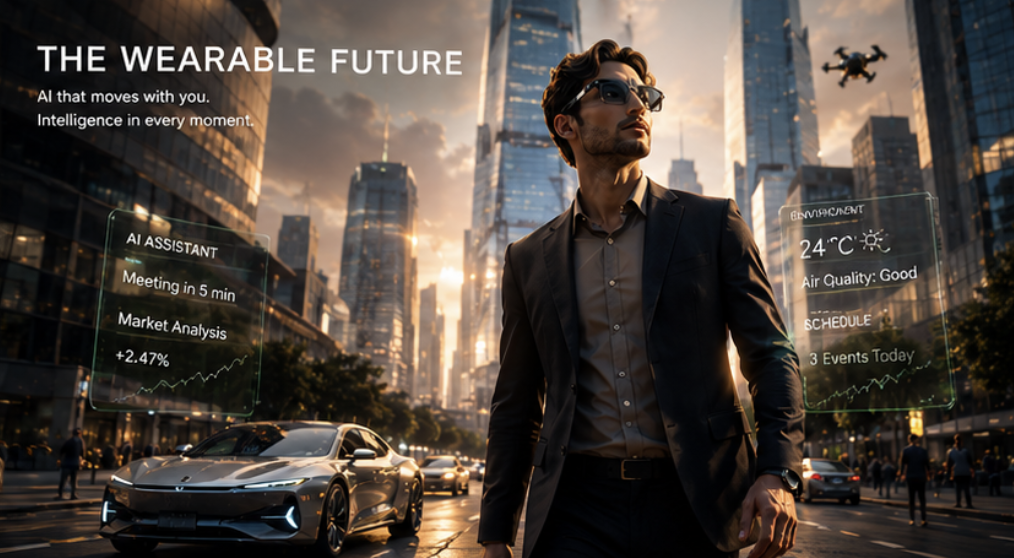
This is no longer a concept video or a futuristic demo. In 2026, millions of people are already using AI-powered smart glasses for communication, navigation, translation, and daily assistance. For the first time, wearable AI is beginning to reduce our dependence on smartphones.
The question is no longer “Will smart glasses become useful?” It is “How much of your phone will they replace?”
Why 2026 Feels Different
Smart glasses have been promised for over a decade. Google Glass failed. Snapchat Spectacles remained a niche product. Most wearable experiments disappeared before reaching mainstream users.
What changed this time?
Three major breakthroughs happened simultaneously.
AI became genuinely useful. Modern language models are fast, accurate, and conversational enough to act as a reliable everyday assistant.

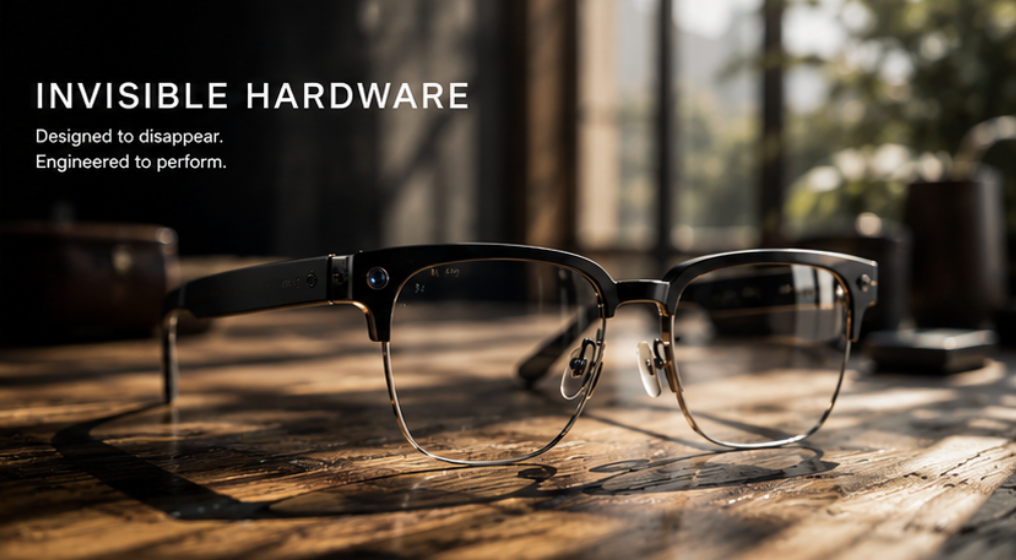
Hardware became invisible. The latest smart glasses look almost identical to regular eyewear instead of bulky futuristic headsets.
Battery life finally became practical. Most current-generation devices can now last through a significant portion of the day, making them wearable rather than experimental.

For the first time, the technology has caught up with the original promise.
What AI Smart Glasses Can Actually Do in 2026
Despite the hype, today’s AI smart glasses are not full holographic AR headsets. Their real power comes from seamless voice and vision-based assistance.
| Feature | What it does |
|---|---|
| Real-time translation | Hear conversations translated instantly into your preferred language |
| Hands-free communication | Listen to messages, dictate replies, and handle calls without touching a phone |
| Contextual AI assistance | Look at a menu, sign, product, or document and receive instant summaries or recommendations |
| Navigation | Get turn-by-turn audio directions while keeping your eyes on the road |
| Health monitoring | Track heart rate, activity, stress, and sleep passively throughout the day |
| Visual memory | Ask questions such as “Where did I park?” and receive context-aware answers |
The key difference is that the technology works in the background instead of demanding your attention.
The Devices Leading the Shift
Meta Ray-Ban Smart Glasses
The most widely adopted AI glasses today. They resemble standard Ray-Ban frames and integrate Meta AI for messaging, search, photography, and real-time assistance.
Apple Vision Lite
A lighter and more affordable evolution of Apple’s wearable ecosystem, designed for all-day use with deep integration across iPhone, Apple Watch, and Apple Intelligence services.
Google Gemini Glasses
Google’s comeback after the failure of Google Glass. Powered by Gemini AI, these glasses are particularly strong in real-time translation, navigation, and contextual search.
Samsung Galaxy Glasses
Samsung’s AI-focused wearable platform excels in communication, photography features, and integration with the broader Galaxy ecosystem.
Are They Really Replacing Smartphones?
The honest answer is: not completely—yet.
What smart glasses can already replace
Real-time translation
Voice messaging and calling
Turn-by-turn navigation
Quick information lookup
Daily health tracking
Simple AI interactions
What still requires a smartphone
Web browsing
Watching videos
Gaming
Mobile payments in many regions
Professional photography
Complex apps and multitasking
A better way to describe the transition is this:
AI smart glasses are replacing smartphone behaviours before they replace smartphones themselves.
Every new generation takes over a few more tasks that previously required pulling a phone from your pocket.
Who Is Wearing Smart Glasses in 2026?
Early adopters were mostly tech enthusiasts. The current user base is much broader.
| User group | Main reason |
|---|---|
| Busy professionals | Productivity and hands-free communication |
| People with disabilities | Accessibility and voice-first assistance |
| Older adults | Easier interaction than small touchscreen interfaces |
| Athletes and outdoor users | Navigation and fitness without screen distraction |
| Frequent travellers | Instant language translation and travel assistance |
A technology becomes mainstream when people buy it to solve a problem rather than to show off a gadget. Smart glasses are approaching that point.
The Privacy Problem Nobody Has Solved
This is the issue that could shape the entire industry.
A smartphone records what you do on a screen.
AI smart glasses can potentially record what you see in the real world.
That raises difficult questions:
Who owns the visual data collected by your glasses?
What rights do bystanders have if they are captured by wearable cameras?
How should companies store years of visual memory and location history?
What happens if that data is breached or misused?
Governments in Europe, the United States, and parts of Asia are actively debating these questions right now. The future of smart glasses may depend less on hardware and more on privacy regulation.
The Next 3–5 Years
The next phase of AI glasses is likely to focus on four major improvements.
Lightweight Displays
Transparent displays that overlay useful information directly into your field of view without the bulk of current AR headsets.
Longer Battery Life
True all-day reliability for heavy users is expected within the next few product generations.
Lower Prices
Today’s flagship models typically cost between $300 and $700. Mass adoption will likely require capable devices closer to $150.
Clear Regulations
Consistent rules around recording, consent, and data ownership will determine how quickly these devices enter schools, workplaces, public transport, and everyday life.
Smart Glasses vs Smartphones
| Factor | AI Smart Glasses | Smartphone |
|---|---|---|
| Hands-free use | Excellent | Poor |
| Real-time translation | Excellent | Requires an app |
| Screen-based tasks | Limited | Excellent |
| Photography | Basic | Advanced |
| Battery life | Improving | Reliable |
| Privacy risk | Higher | Moderate |
| Price | $300–700 | Available at all price points |
| Social acceptance | Growing | Fully normalised |
Final Thoughts
AI smart glasses are not replacing smartphones overnight. But they are already replacing many of the small interactions that once required checking a screen dozens of times a day.
The momentum is real. The technology is finally practical. And each new generation becomes a little less dependent on the phone in your pocket.
The most important question is no longer whether AI smart glasses will become part of everyday life.
It is whether society can solve the privacy, social, and regulatory challenges that come with a device capable of seeing, hearing, and understanding the world around you.
If those challenges are handled well, AI smart glasses could become the defining personal technology of the late 2020s.
Comments
Sign in to join the conversation
Sign inNo comments yet
Be the first to share your thoughts!