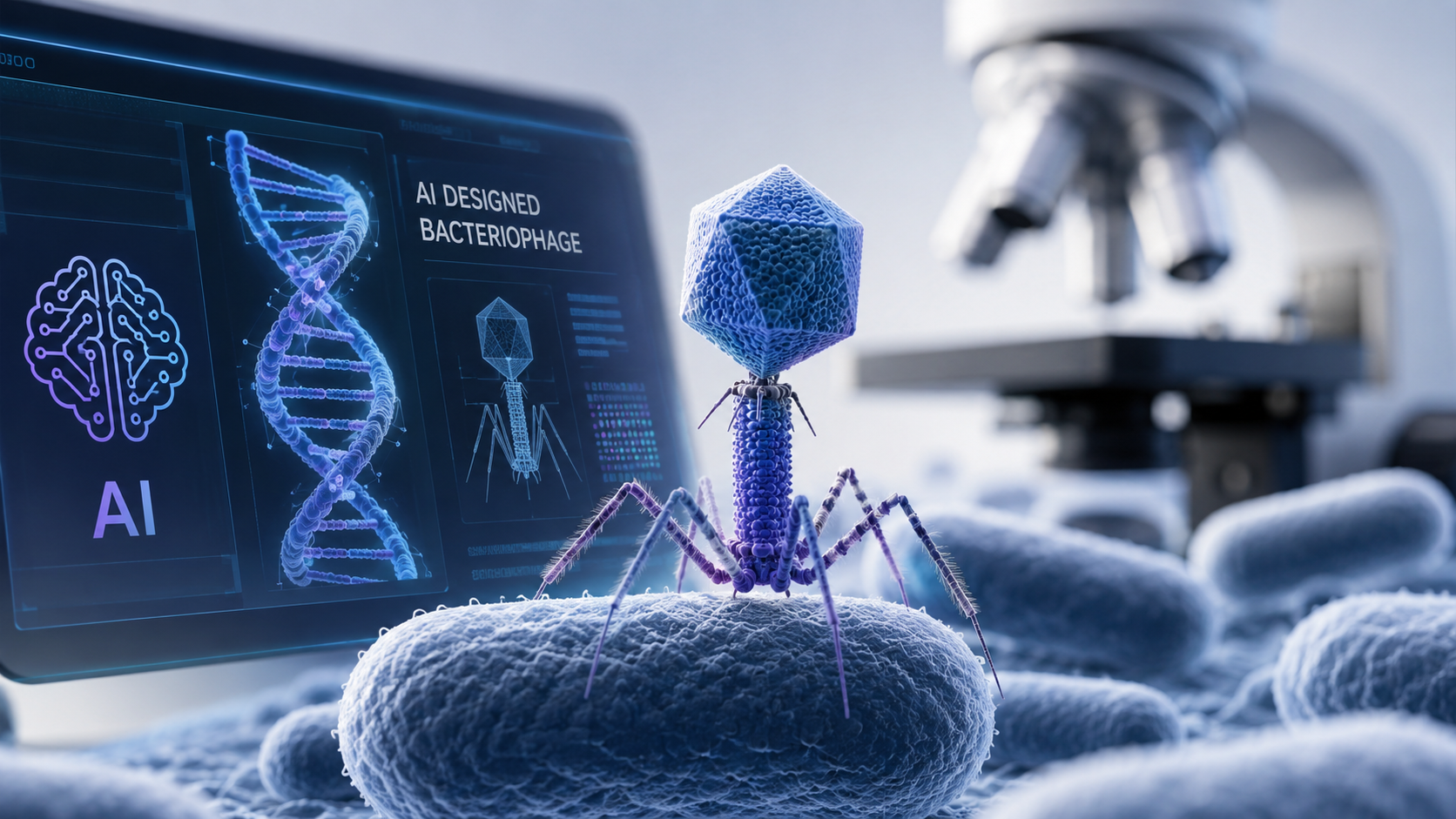

Artificial intelligence has spent the last few years learning how to write, code, create images, and solve complex problems.
Now it is moving into something far more consequential:
Biological design.
In a landmark study published in Science on August 6, 2026, researchers led by Stanford scientist Brian Hie demonstrated that AI could generate novel bacteriophage genomes that actually worked when tested in the laboratory.
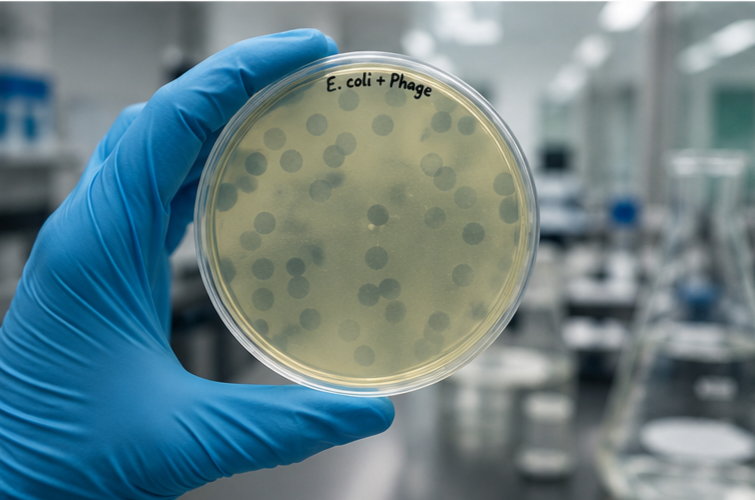
16 AI-designed bacteriophages were found to be viable and capable of infecting and killing E. coli.
That is a remarkable scientific achievement.
It also raises a much bigger question:
If AI can design viruses that work, where does this technology go next?
🧬 AI Is Moving From Studying Biology to Designing It
AI has already become a powerful tool for analyzing biological information.
Researchers can use machine-learning models to:
- Analyze DNA sequences
- Identify genetic patterns
- Predict biological functions
- Study mutations
- Explore relationships between genes
But genome-focused AI models are beginning to take the next step.
Instead of simply asking:
"What does this DNA sequence do?"
Scientists can increasingly explore:
"What biological sequence could perform a particular function?"
That shift from prediction to design could transform biotechnology.
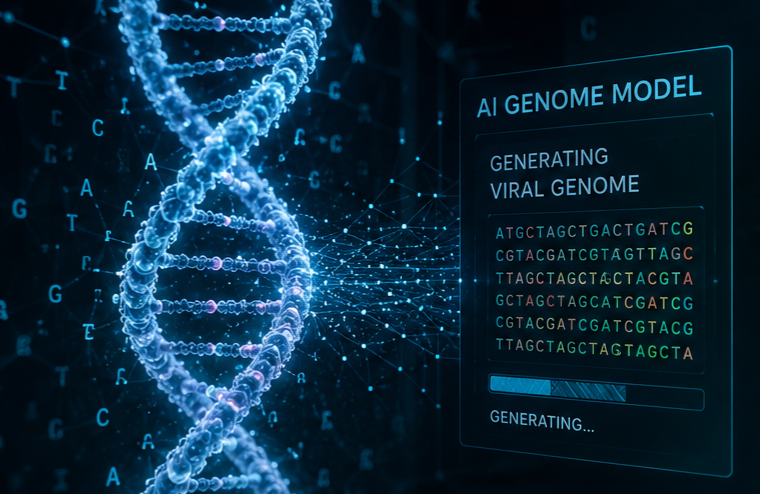
The research involved genome language models from the Evo family, including Evo 1 and Evo 2.
These models learn patterns from enormous collections of genetic sequences.
The basic idea is similar to how language models learn relationships between words and sentences.
Genome models instead learn patterns within biological sequences.
🧫 The Scientists Worked With Bacteriophages
The researchers did not attempt to create a human virus.
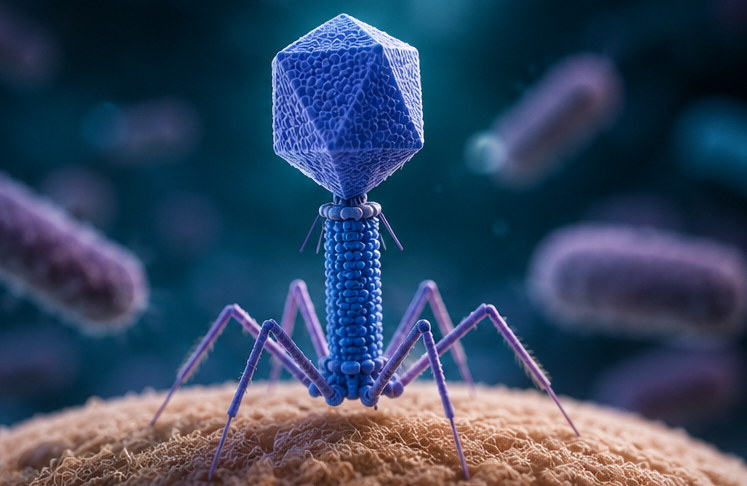
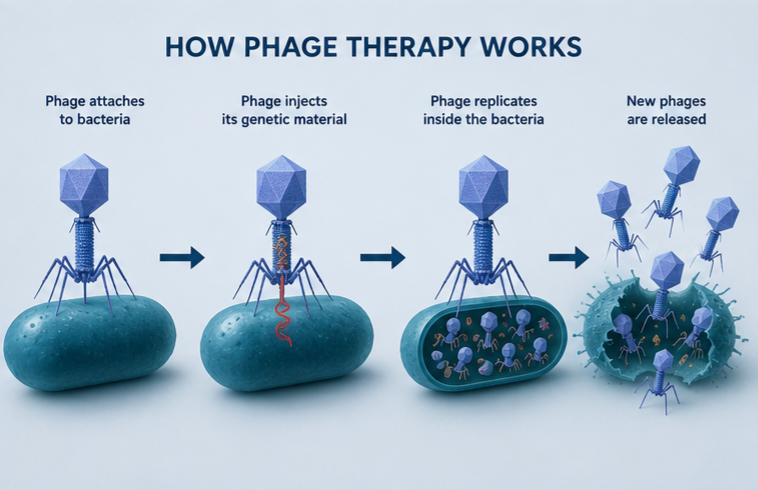
Their work focused on bacteriophages, commonly called phages.
These are viruses that infect bacteria.
That makes them particularly interesting for medicine because scientists have been studying bacteriophages as a possible way to target bacterial infections.
The researchers used AI to generate candidate phage genomes and then tested selected designs experimentally.
The result was striking:
16 AI-designed phages were viable.
They were capable of infecting and killing E. coli in laboratory experiments.
This is the key breakthrough.
The AI wasn't simply producing DNA sequences that looked plausible on a computer screen.
Some of its designs resulted in functioning biological systems.
💊 Why Antibiotic Resistance Makes This So Important
Antibiotic resistance is one of the biggest challenges facing modern medicine.
Bacteria can evolve resistance to drugs that were once highly effective.
As resistance increases, some infections become increasingly difficult to treat.
Phages offer a different approach.
Instead of using conventional antibiotics, researchers can investigate viruses that specifically target bacteria.
But finding useful phages can be difficult.
Nature contains an enormous variety of bacteriophages, and researchers traditionally have to search for naturally occurring candidates before testing them.
AI introduces another possibility.
Instead of looking only at what nature has already produced, scientists can use computational models to explore a much larger design space and identify candidates for experimental testing.
If the approach continues to improve, it could eventually accelerate research into:
- Phage-based treatments
- Antibiotic-resistant infections
- Targeted bacterial therapies
- New biological research tools
⚠️ The Bigger Story Is Bigger Than Phages
The medical potential is exciting.
But the most important part of this research may be what it says about the future of AI and biology.
For years, AI was primarily used to understand biological systems.
Now researchers are increasingly using it to design them.
That creates enormous opportunities.
AI could potentially help scientists explore new:
Medicines → Therapeutics → Biological materials → Research systems
much faster than traditional approaches.
But it also creates a completely new category of risk.
🛡️ Why Biosecurity Experts Are Concerned
The same technology that can help scientists design useful bacteriophages could become more powerful over time.
That raises an obvious concern:
What happens if increasingly capable biological AI systems are eventually used to design harmful biological agents?
The current study does not demonstrate that capability.
The viruses produced in this research were bacteriophages targeting bacteria.
But researchers and biosecurity experts are increasingly focused on preventing future AI systems from being misused.
This is why the breakthrough has generated discussion far beyond the laboratory.
🔬 AI Cannot Simply Be "Patched" Like Software
One reason biological AI presents such a difficult governance problem is that biology works differently from software.
A software vulnerability can often be fixed with an update.
A biological system is different.
Once a biological design is physically produced, it enters the real world and becomes subject to biological processes that are much harder to control.
That means safety cannot depend on a single protective measure.
Potential safeguards could involve:
- AI model developers
- Research institutions
- Laboratory safety systems
- DNA-synthesis providers
- Government regulators
- Independent biosecurity researchers
The goal is to make sure promising biological research can continue while dangerous applications are detected before they become physical reality.
❌ Does This Mean AI Created a Human Virus?
No.
This distinction is extremely important.
The study demonstrated AI-assisted design of bacteriophages, which are viruses that infect bacteria.
It did not demonstrate the creation of a virus designed to infect humans.
So the breakthrough should not be interpreted as evidence that scientists have created an AI-generated pandemic virus.
The significance lies somewhere else:
AI has demonstrated an ability to generate novel viral genomes that can function experimentally.
That capability deserves careful scientific and regulatory attention as the technology develops.
🧠 The Beginning of AI-Powered Synthetic Biology
The August 2026 breakthrough represents a much larger shift in the relationship between artificial intelligence and biology.
The progression increasingly looks like this:
Understand Biology
↓
Predict Biology
↓
Design Biology
That final step could be transformative.
Imagine a future where researchers can use AI to explore enormous numbers of possible biological designs, identify promising candidates, and then experimentally validate them.
That could dramatically accelerate areas such as:
- Drug discovery
- Biotechnology
- Synthetic biology
- Medical research
- Phage therapy
But the same acceleration means safety research has to move just as quickly.
🌍 The Promise and the Warning
The potential benefits are enormous.
AI-designed bacteriophages could eventually help researchers develop new ways to target antibiotic-resistant bacteria.
The technology could also demonstrate a new model for biological discovery, where AI explores possibilities that would be difficult for humans to search manually.
But the breakthrough comes with an important warning.
The more capable AI becomes at designing biological systems, the more important it becomes to build safeguards around those capabilities.
The real story isn't simply that:
"AI designed viruses."
It's that artificial intelligence is beginning to move from analyzing life to helping scientists design it.
And that could become one of the most consequential developments in biotechnology this decade.

Comments
1Sign in to join the conversation
Sign in