
Your Next Streaming PC Might Be a Laptop
For years, serious streamers had a familiar setup.
One powerful PC ran the game.
Another PC handled the stream.
Then came the capture card, multiple monitors, cables, audio interfaces and enough equipment to make a streaming desk look like a miniature production studio.
But something is changing in 2026.
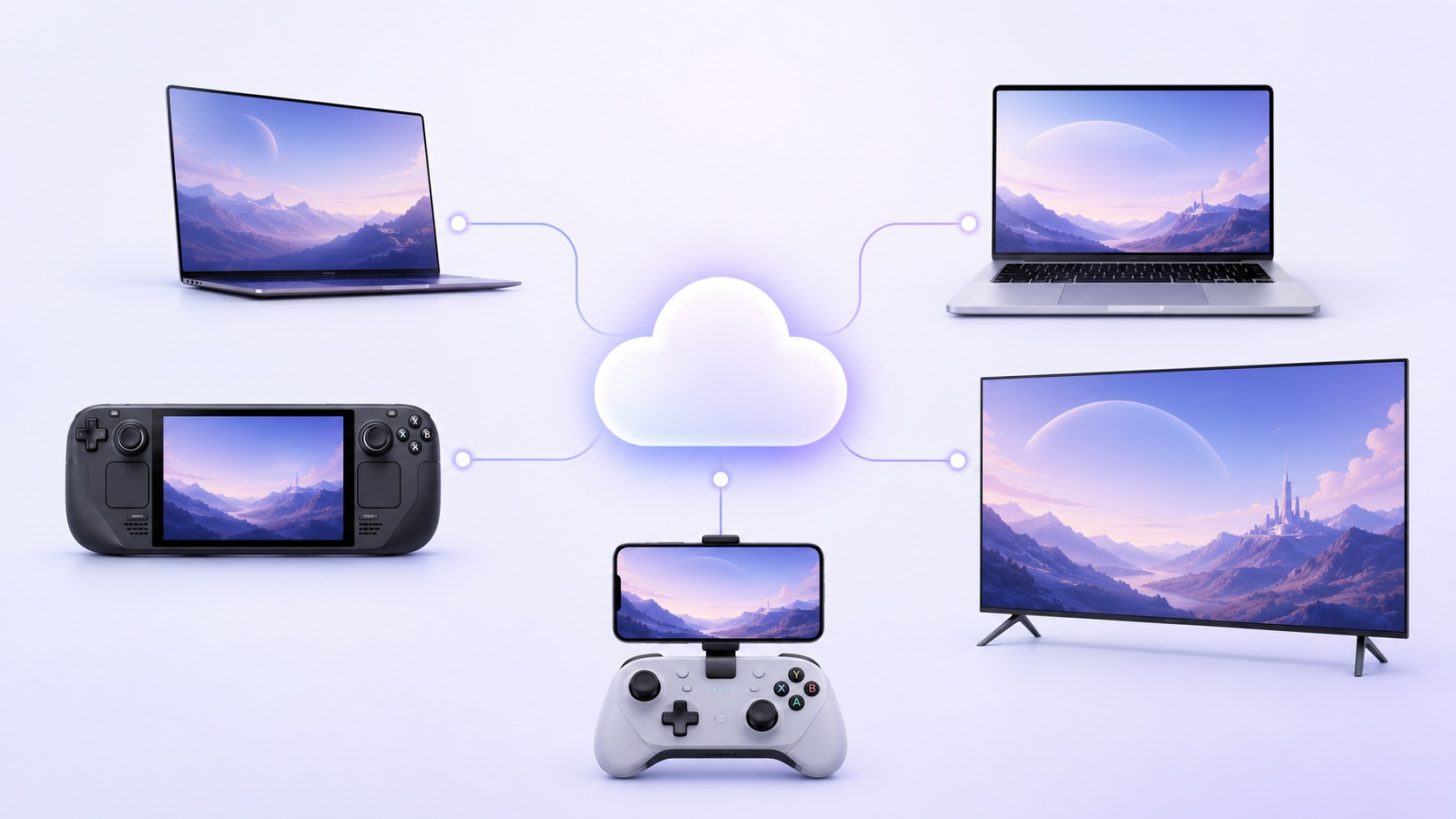
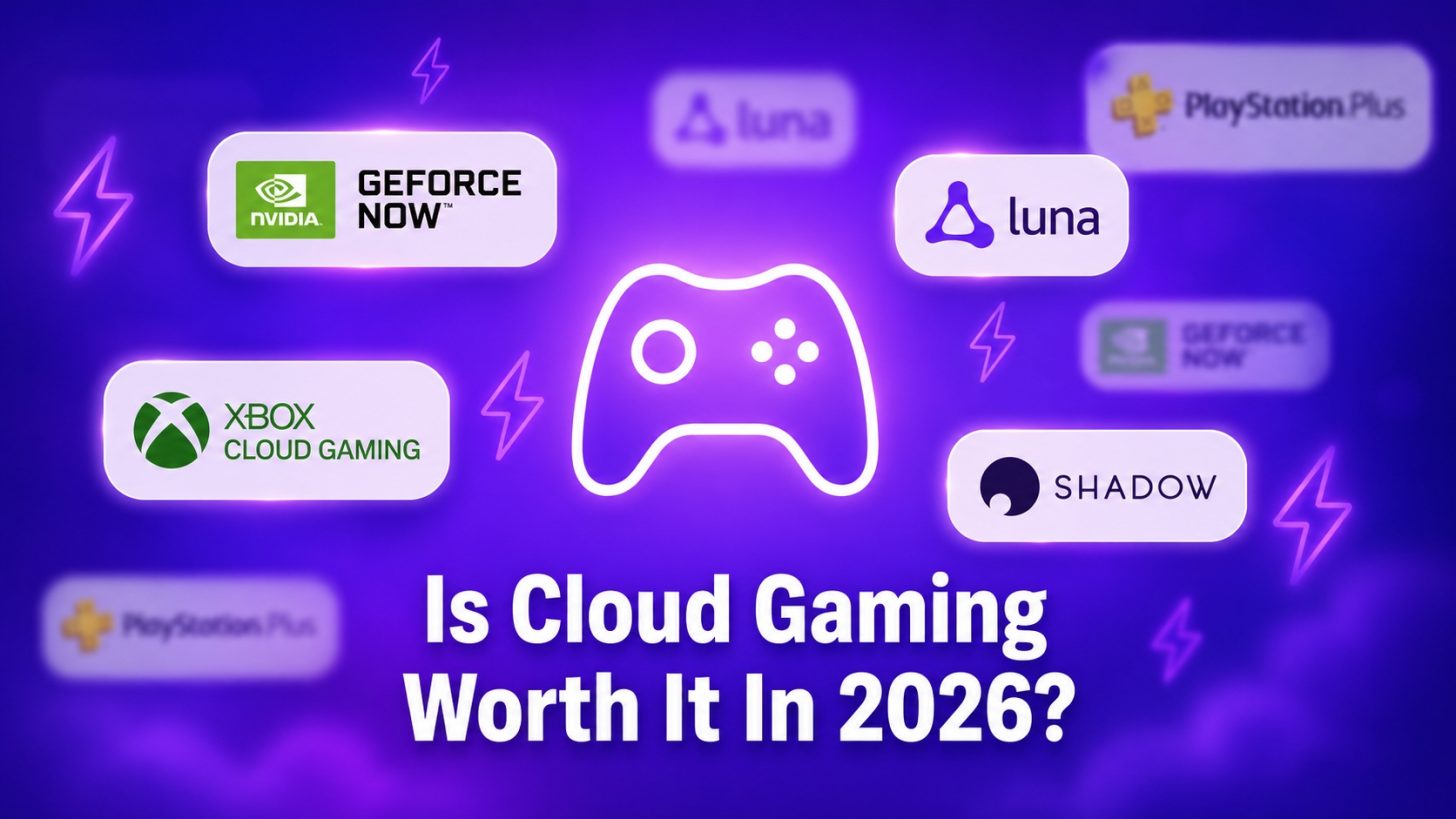
Cloud gaming is making the physical gaming PC less important.
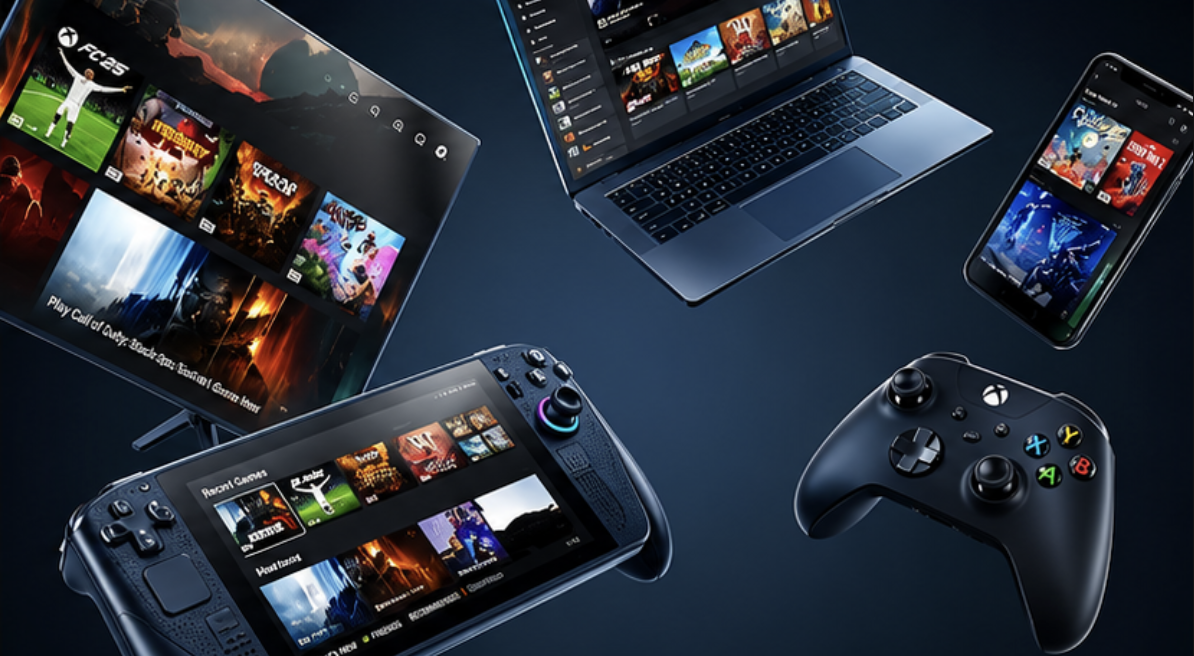
Instead of carrying a powerful GPU everywhere, creators can connect a lightweight laptop to a remote gaming system and access the performance they need.
That raises a pretty interesting question.
If the game is running somewhere else, why carry the machine that runs it?
⚡ The Dual PC Setup Had a Good Reason
Dual PC streaming was never about showing off expensive hardware.
It solved a genuine technical problem.
A demanding game could push a gaming PC close to its limits while streaming software simultaneously needed resources for encoding, recording, alerts, browser sources and other creator tools.
A second PC separated those workloads.
| Traditional Setup | Cloud Gaming Setup |
|---|---|
| Powerful gaming PC | Lightweight laptop |
| Dedicated streaming PC | Streaming software on local device |
| Capture card | Network connection |
| Multiple cables | Minimal hardware |
| High portability cost | Much easier to travel with |
| Hardware owned locally | Gaming performance accessed remotely |
The traditional approach is still extremely powerful.
But it also has one major weakness.
You have to carry it.
For a creator who streams from the same room every day, that is not a huge problem.
For someone travelling constantly, it becomes a completely different story.
⚠️ QUICK TAKE: The biggest advantage of cloud gaming for streamers isn't simply cheaper hardware. It's portability. A creator can potentially access high end gaming performance without physically transporting a high end gaming PC.
☁️ Cloud Gaming Changes Where the GPU Lives
Cloud gaming works by moving the expensive part of the gaming experience away from the user's device.
The game runs on powerful remote hardware.
Your laptop receives the video.
Your keyboard, mouse or controller sends inputs back.
That means the laptop doesn't need to render every frame itself.
This completely changes the hardware equation.
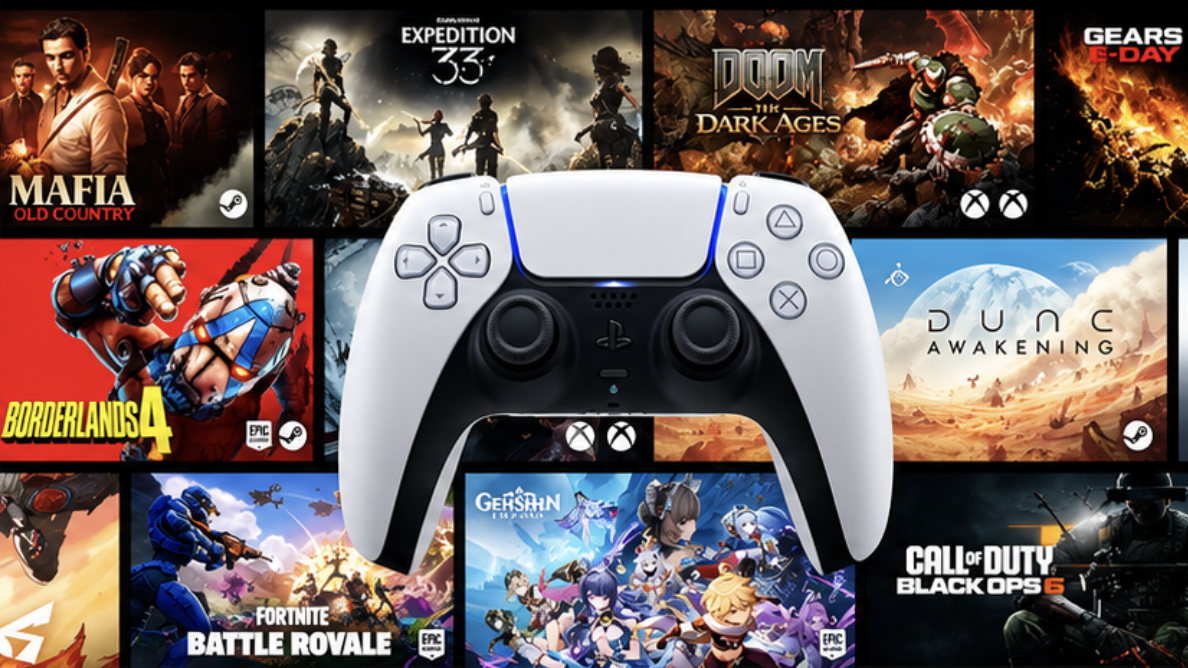
A lightweight machine that would struggle to run a modern AAA game locally can potentially display that same game through the cloud.
The laptop becomes the window to the GPU instead of the GPU itself.
🚀 Input Delay Is Finally Getting Serious Attention
There is one reason cloud gaming spent years being treated as a compromise.
Latency.
Every input has to travel through the network before the game responds.
Early cloud gaming could make this delay extremely noticeable.
That was especially problematic for competitive games where milliseconds matter.
But modern cloud gaming platforms are putting much more emphasis on low latency streaming, better server infrastructure and technologies designed to reduce the gap between local and remote gaming.
The experience still depends heavily on your connection.
But the conversation is changing.
Cloud gaming isn't trying to eliminate physics.
It is trying to make the delay small enough that most players stop thinking about it.
What Actually Determines Your Cloud Gaming Experience?
• Distance from the gaming server
• Internet speed
• Network stability
• Wi Fi quality
• Server availability
• Streaming resolution and frame rate
• Input latency
This is why cloud gaming isn't automatically perfect everywhere.
A great cloud connection can feel remarkably close to local gaming. A bad one can make the entire experience frustrating.
💻 The Lightweight Laptop Suddenly Makes Sense
This is where things become especially interesting for streamers.
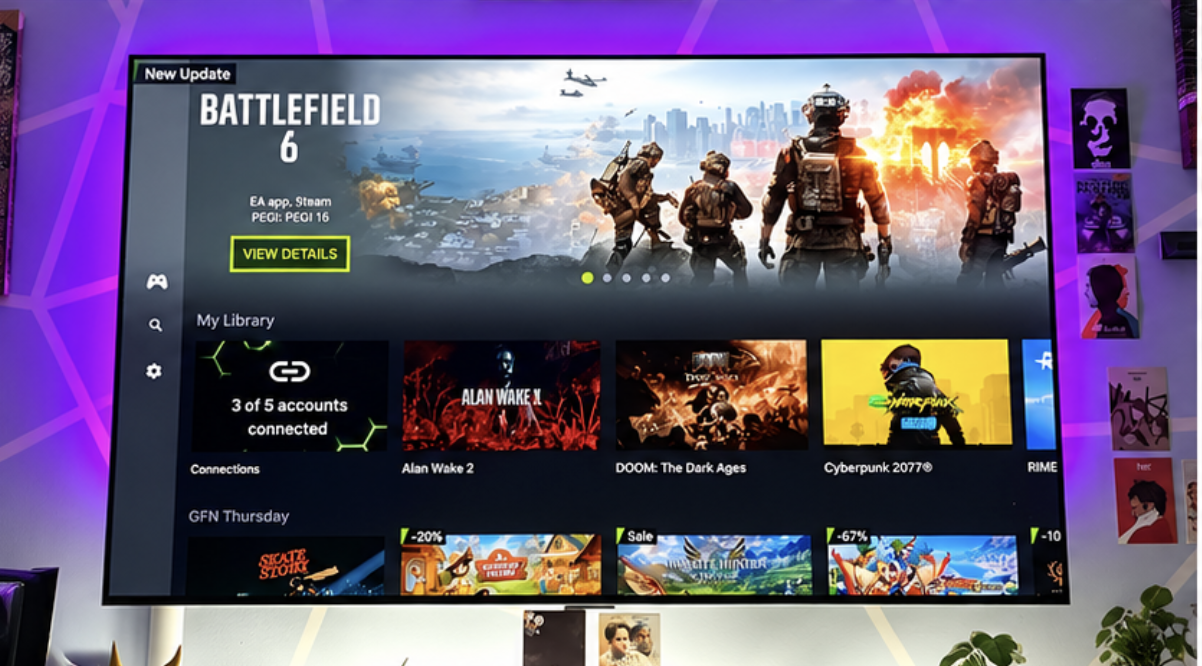
Imagine a creator with a thin laptop that weighs only a few kilograms.
Normally, that laptop might not have enough GPU power for the latest AAA games.
With cloud gaming, the situation is different.
The creator could potentially use that laptop for:
• Playing demanding games
• Running streaming software
• Managing chat
• Monitoring alerts
• Controlling scenes
• Talking to viewers
The heavy rendering happens remotely.
That means creators can reduce the amount of physical equipment they need without necessarily reducing the quality of the games they play.
💡 CREATOR NOTE: Cloud gaming doesn't necessarily replace every powerful gaming PC. Its biggest advantage is giving creators another way to access that performance when carrying or maintaining a full desktop setup isn't practical.
🎥 Why This Matters for Streamers
The biggest beneficiaries could be creators who don't stay in one place.
Travel streamers are an obvious example.
A traditional setup can involve transporting:
• Gaming PC
• Streaming PC
• Capture card
• Monitors
• Power supplies
• Cables
• Peripherals
A cloud based setup can potentially reduce that to a laptop, microphone and a reliable internet connection.
That is a massive difference.
A creator could move between a hotel, studio, event or temporary workspace without rebuilding an entire gaming station every time.
The New Streaming Equation
Traditional approach
Powerful hardware → Game → Capture → Streaming PC → Audience
Cloud approach
Cloud GPU → Lightweight device → Streaming workflow → Audience
The second setup removes a surprising amount of physical complexity.
🌍 Your Games Are No Longer Tied to One Desk
Cloud gaming also changes something else.
Location.
A traditional gaming PC is physically connected to the place where it lives.
Cloud gaming moves the gaming environment closer to the creator's account rather than their desk.
A streamer could potentially play at home and later continue from a laptop while travelling.
That means the creator's workflow becomes less dependent on one physical machine.
The hardware can change.
The experience can remain familiar.
This is particularly useful for creators who already work across multiple locations.
🎮 Does This Mean Dual PC Streaming Is Dead?
Not quite.
There are still plenty of reasons to keep a powerful local setup.
| Local Hardware | Cloud Gaming |
|---|---|
| Maximum hardware control | Maximum portability |
| Very low local latency | Dependent on network |
| No internet requirement for local gaming | Internet is essential |
| Predictable performance | Performance can vary |
| Higher upfront hardware cost | Service based cost |
| Excellent for competitive gaming | Excellent for flexibility |
Competitive streamers may continue preferring local hardware.
Creators who record huge amounts of footage locally may also prefer having everything on their own machines.
And if you already own a powerful gaming PC, switching completely to cloud gaming may not make financial sense.
The real future is probably not cloud versus PC.
It is cloud plus PC.
🔄 The Hybrid Setup Could Become the Sweet Spot
The most practical solution for many creators could be a hybrid workflow.
Keep the powerful gaming PC at home.
Use cloud gaming when travelling.
That gives creators the best of both worlds.
At home, they get maximum performance and control.
On the road, they get portability.
This could be especially useful for creators who attend gaming events, esports tournaments, conventions or extended trips.
🧠 EDITOR'S NOTE: The interesting part of the cloud gaming shift isn't that everyone suddenly needs to throw away their desktop. It's that creators no longer have to choose between powerful gaming and portability.
📈 The Hardware Advantage Is Slowly Moving to the Cloud
There is a bigger technology shift happening underneath all of this.
For decades, better gaming meant buying better hardware.
More powerful GPU.
More memory.
Better cooling.
Bigger desktop.
Cloud gaming introduces a different model.
Performance becomes something you access instead of something you own.
That distinction could become increasingly important as games become more demanding.
A lightweight laptop from 2026 doesn't necessarily need to match the performance of a high end gaming desktop if the cloud infrastructure is doing the heavy work.
And for creators, that could mean spending less time thinking about hardware limitations and more time thinking about the content itself.
🔮 What Happens Next?
The next stage will depend on three things.
1. Lower Latency
Cloud providers need to keep reducing the gap between local and remote gaming.
2. Better Image Quality
Higher resolutions and frame rates need to arrive without requiring unreasonable internet connections.
3. Greater Reliability
Creators cannot afford a stream falling apart because their cloud gaming connection suddenly becomes unstable.
If those areas continue improving, lightweight laptops could become surprisingly capable creator machines.
And that could make the traditional idea of a streaming setup look very different.
Final Thoughts
⚠️ QUICK TAKE: Cloud gaming isn't killing the gaming PC. It's changing where the expensive computing power needs to exist. For travelling creators, that distinction could be enormous.
🎮 A Much Smaller Streaming Future
The dual PC setup solved yesterday's streaming problem.
Cloud gaming is asking whether we need all that hardware sitting beside us in the first place.
For creators, the biggest attraction isn't simply playing AAA games on a weaker laptop.
It's the freedom that comes with not having to carry the hardware responsible for running them.
A lightweight laptop, reliable connection and streaming software could eventually provide enough flexibility for creators to broadcast from almost anywhere.

Comments
Sign in to join the conversation
Sign inNo comments yet
Be the first to share your thoughts!