Valve's latest SteamOS is out with 'initial support for upcoming Steam Machine hardware'
discords.ai
June 18, 2026
After a standard spell in beta, the latest iteration of SteamOS—Valve's Arch-based Linux distro for use on Steam Deck, Steam Machine, and Steam Frame—has hit the big three-eight. Or, well, three-point-eight. SteamOS 3.8 is out, is what I'm saying, and if you turn your face to the wind and inhale, you can detect the first notes of upcoming hardware.
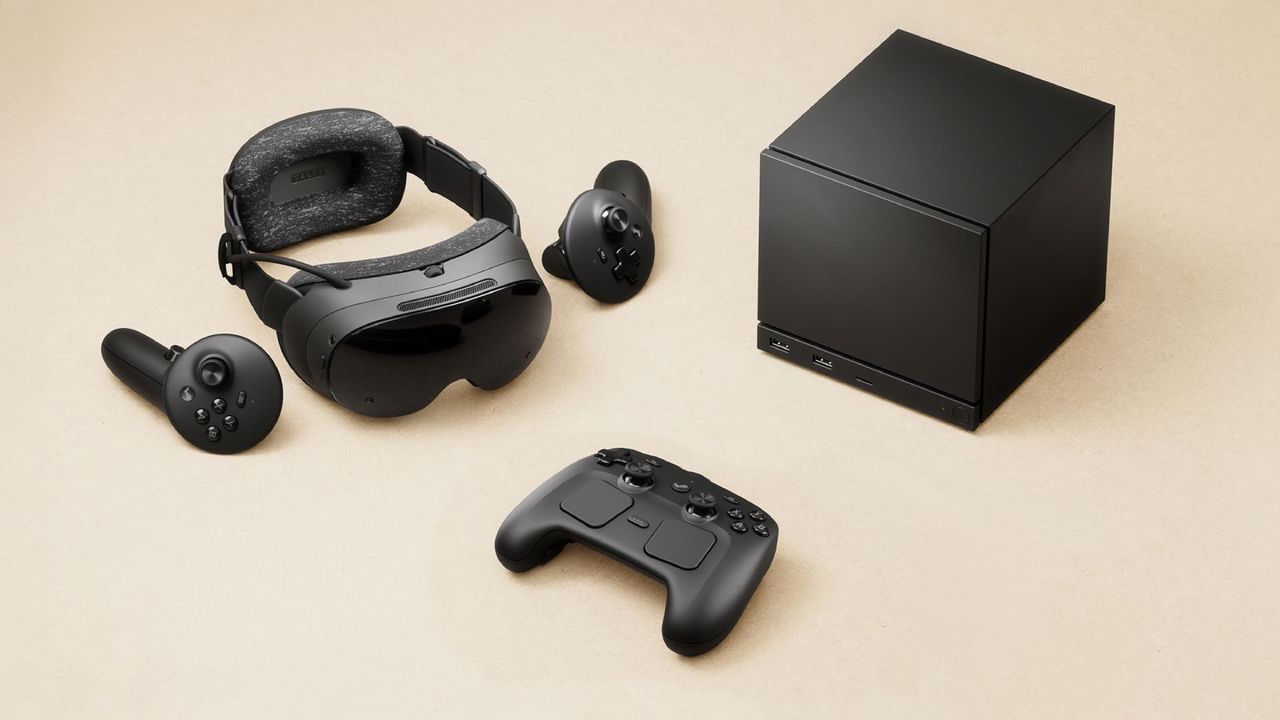
Specifically, the Steam Machine, for which SteamOS 3.8 brings "initial support," as well as support for waking a SteamOS device from sleep via a connected Steam Controller. Alas, no word on the Steam Frame in these patch notes, but consider me as eager as ever to get my hands on Valve's living room box, presuming the RAM crisis has not made it cost $5,000 dollars.
But this is a pretty big release even excluding the GabeCube stuff. I'll stick the full patch notes down below, but there are a number of tweaks and new features that leap out to me as a longtime Deck user. Chief among them is that yer Deck now defaults to Wayland rather than X11 in desktop mode.
Those are two different display servers for Linux desktops—the gubbins that make your GUI function when you're not working straight in the virtual console like god intended. To cut to the chase: X11 is the old one (and as such, tends to have greater compatibility and work better for some particular tasks, at least for now) and Wayland is the new one (though it's been out in some form for nearly 20 years)—it's more secure and generally a bit more dextrous for most tasks.
50px;">
So swapping to Wayland-by-default means that SteamOS has reduced "several cases of reduced performance in Desktop Mode compared to Game Mode" on your Steam Deck, desktop mode also has better scaling on TVs, support for external HDR displays, and support for VRR displays. The kind of stuff you might care about if you were making an OS for a device that's expected to live underneath people's TVs.
There are also new BIOSes for the LCD and OLED Decks, which will be installed as part of the general 3.8 update when you run it. The LCD one, sorry to say, isn't too exciting, save that it adds preliminary support for device hibernation. OLED, though? Valve's updated the Deck so that the charging LED now respects your device charging settings. If you set your Deck to top out at 80% charge for battery health reasons, then the LED will turn green—meaning fully charged—when it reaches that point, rather than remaining standard 'charging' white for eternity.
All good stuff, then. Here are the full patch notes for your perusal.
General
Updated Arch system base
Initial support for upcoming Steam Machine hardware
Added support for waking from sleep via connected Steam Controller
Substantially improved speed of future OS updates on high-speed connections
Improved support for screen casting in Game Mode (e.g. OBS/Discord)
Fixed dropdown menus not appearing in some games
Fixed excessive trackpad sensitivity on certain early Steam Deck LCD models
Improved support for games that attempt to open PDF files in external viewers
Fixed an issue where video output could become frozen while using Remote Play
Fixed a possible session crash when using Game Recording with certain "Maximum video height" settings
Fixed an issue affecting certain titles (such as "SpongeBob SquarePants: Titans of the Tide") where the game window could have an incorrect position
Fixed closing certain titles (such as "STAR WARS Jedi: Survivor™" and Starfield) resulting in a session crash
Improved support for certain USB racing wheels and USB devices that boot in a non-standard mode
Frequently these are devices that appear as USB storage devices with a driver installer, and must be switched to their normal mode by the OS
Steam Deck controller firmware updates now display update progress on the splash screen
Fixes issue on specific Steam Deck revisions where firmware updates could render the left controller inoperative for that session
Numerous stability and security updates
Display / Performance
Updated graphics driver with performance and stability fixes
Added preliminary support for HDMI VRR for devices with native HDMI output
Fixed an issue where "Allow Tearing" wouldn't have the intended effect in certain configurations
Improved VRR frame pacing
Fixed FSR badge remaining off in the performance overlay, even if it was actually active
Fixed a case where per-app performance settings would intermittently fail to apply when launching a game
Added missing graphics features needed for titles such as "Crimson Desert"
Fixed an issue on certain TCL TVs where the display may remain blank using the Steam Deck Dock when VRR is enabled (requires a Dock firmware update)
Bluetooth / WiFi
Fixed a case where WiFi performance could become degraded until the device was put to sleep or manually reconnected
Re-re-enable Bluetooth Wake for Steam Deck LCD
Fix for more spurious wake issues that were present in earlier attempts
Audio
Detect HDMI channel count and expose surround configuration if available
Add a setting to allow using Bluetooth headset mics (Bluetooth playback quality will be worse while capture is active)
Restore internal audio device on reboot if set to "Off" in desktop mode
Increase suspend timeout for HDMI devices so initial audio isn't cut off after a few seconds of inactivity
Fixed a bug with switching input devices when a wired headset is plugged in
Fixed an issue where audio underruns could be experienced after sleep/resume
Fixed a bug on Steam Deck OLED where rebooting would occasionally cause a loss of speaker output until rebooted again
Fixed a case where FPS limits would fail to apply when downscaling games from a higher resolution
Accessibility
Added an option to force mono audio output
Desktop Mode
KDE Plasma updated to version 6.4.3 from 6.2.5, and now uses wayland by default
Fixes several cases of reduced performance in Desktop Mode compared to Game Mode
Improved support for rotated displays
Better scale factor out of the box on TVs
Adds support for external HDR displays
Adds support for VRR displays
Adds support per-display scale factor
For more information, see Plasma release announcements