'The thing that gives me hope is there is an enormous amount of capacity being built' - AMD's head of Ryzen and Radeon is pinning hopes of an end to the memory crisis on a supply ramp into 2028
discords.ai
June 9, 2026
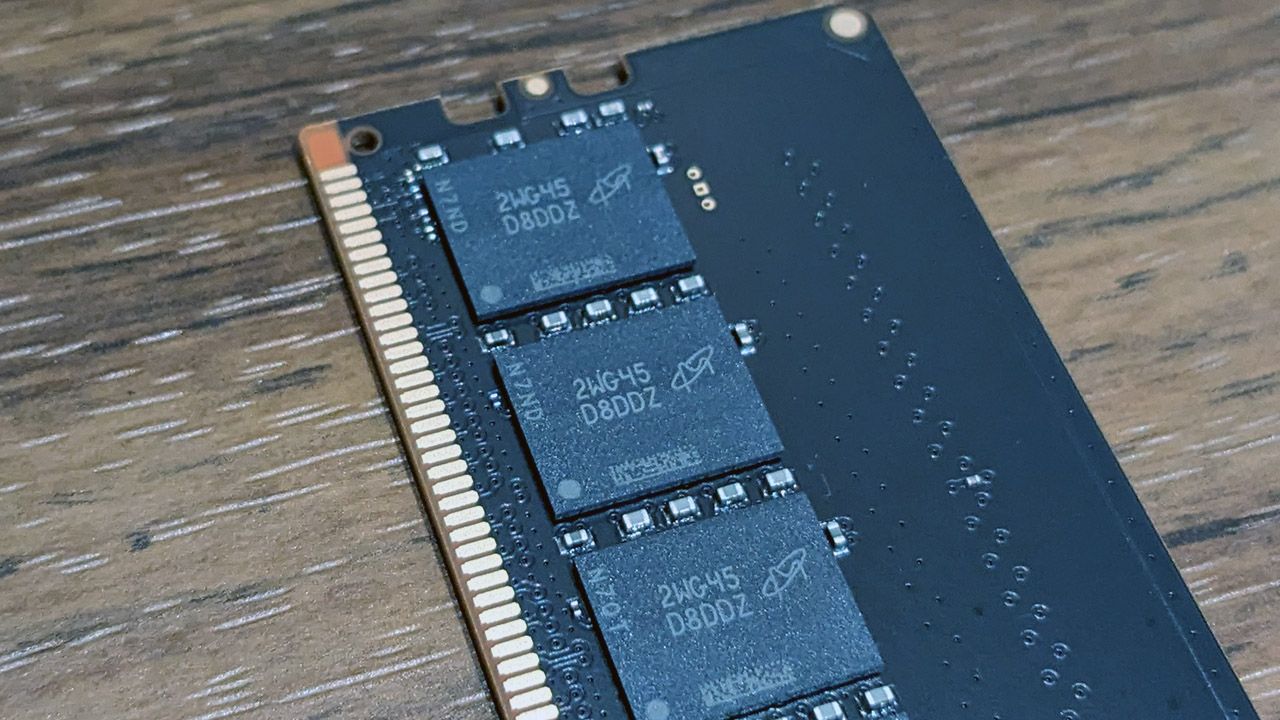
If you've tried to buy RAM for your PC at some point in the last year or so, there's a good chance you've noticed a monumental leap in price. Well, with the explosion of AI, it has taken much of the market's supply of memory with it. The good news is that an AMD head is hopeful we will see DDR5 supplies ramp up greatly at some point in the next two years, as long as demand doesn't ramp up at the same rate.
Recently, we had the chance to interview David McAfee, AMD's global vice president and general manager of the client channel business, who talked about the problem. Despite recently releasing an updated DDR4-supporting CPU, he notes that DDR4 production has dropped over the last few years, and manufacturers have largely moved over to producing DDR5 instead.
"I think that the thing that gives me hope is that there are a couple of things that we know. Right, one of the things that we know is there is an enormous amount of capacity that is being built by the memory manufacturers to bring more production online, and that more production online is going to focus on DDR, LPDDR, HBM, like the newer memory technologies."
50px;">
"I don't expect a lot of DDR4 production to come back into the world, but those newer memory technologies, a significant amount of capacity is coming online," says McAfee. "I think we'll start to see by the end of next year and into 2028 that that ramp really starts to take hold, and then it's just a factor of the forces of supply and demand, and how that affects memory prices."
"The demand side of this cycle of memory is quite unusual, right, with server refresh, with the AI supercycle on top of it, it's very different, and so I think the bigger question is, even with all this capacity coming online, is it enough to satisfy what this AI supercycle demands?"
Just a few months ago, Micron confirmed demand was "significantly in excess of our available supply for the foreseeable future" and suggested its Tongluo-based semiconductor facility wouldn't "support meaningful product shipments" until at least 2028.
But then, even attempting to meet supply carries risk for manufacturers. Samsung and SK hynix opted to "minimise the risk" of oversupply at the end of 2025, suggesting the crisis would be pushing through past 2028. Both are working on new fabs, with SK Hynix expecting its Chengju and Indiana HBM facilities to be operational by late 2028.
McAfee acknowledges this fear from Samsung and SK hynix. "You look over decades of history with memory manufacturers, and they make billions during cycles where there's more demand than supply, and they lose billions of dollars when there's more supply than demand."
More HBM memory does mean the need for more traditional memory from AI firms would go down, but IEEE Spectrum reports that this won't have an immediate impact on price. Even as companies catch up with demand, we can't expect prices to all go down at once. And that doesn't take into account any increases in AI development going forward. If demand continues to rise, it will be harder for supply to keep up with it.
The market is so volatile that it's literally anyone's guess, but companies appear to be trying to scale to meet the challenge of AI resource demand, without scaling so hard that they pop if the AI bubble does. Until then, we PC gamers will have to suffer the costs of all that tech growth. That and PC builders who appear to be just bracing until it all goes back to normal.
Read the full article
This post was imported from an external source. Click to read the complete article on the original website.