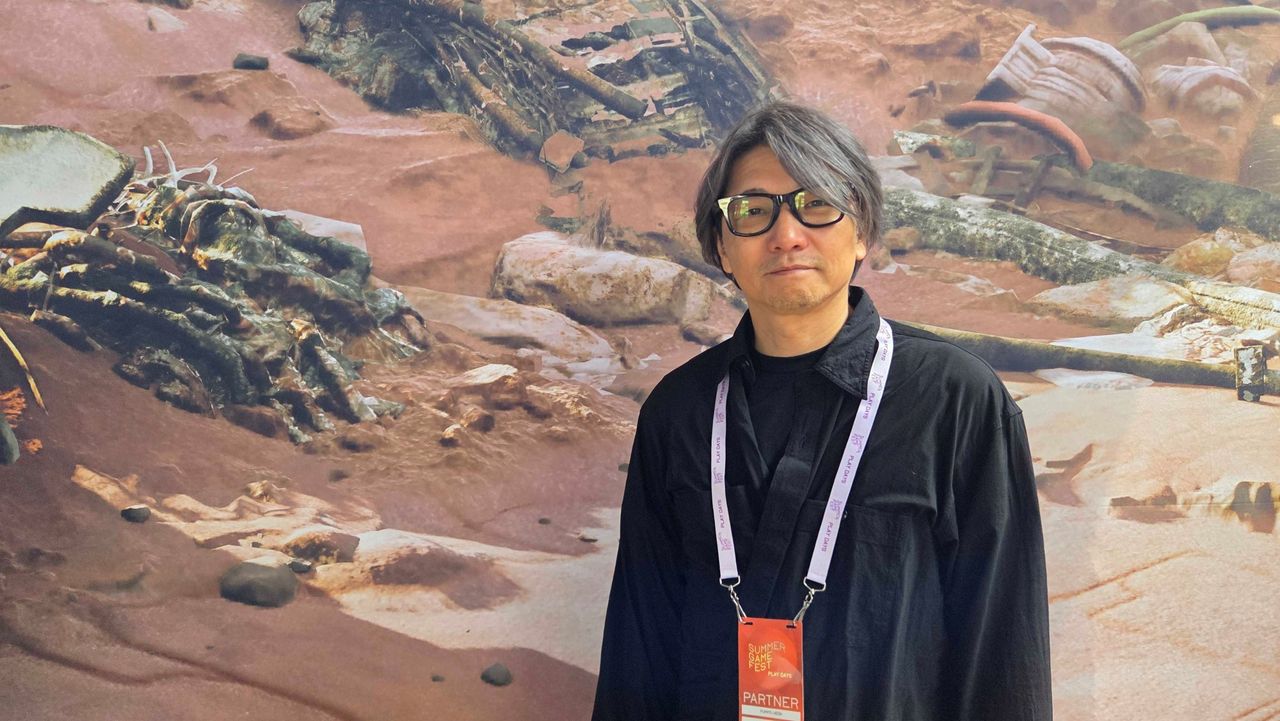

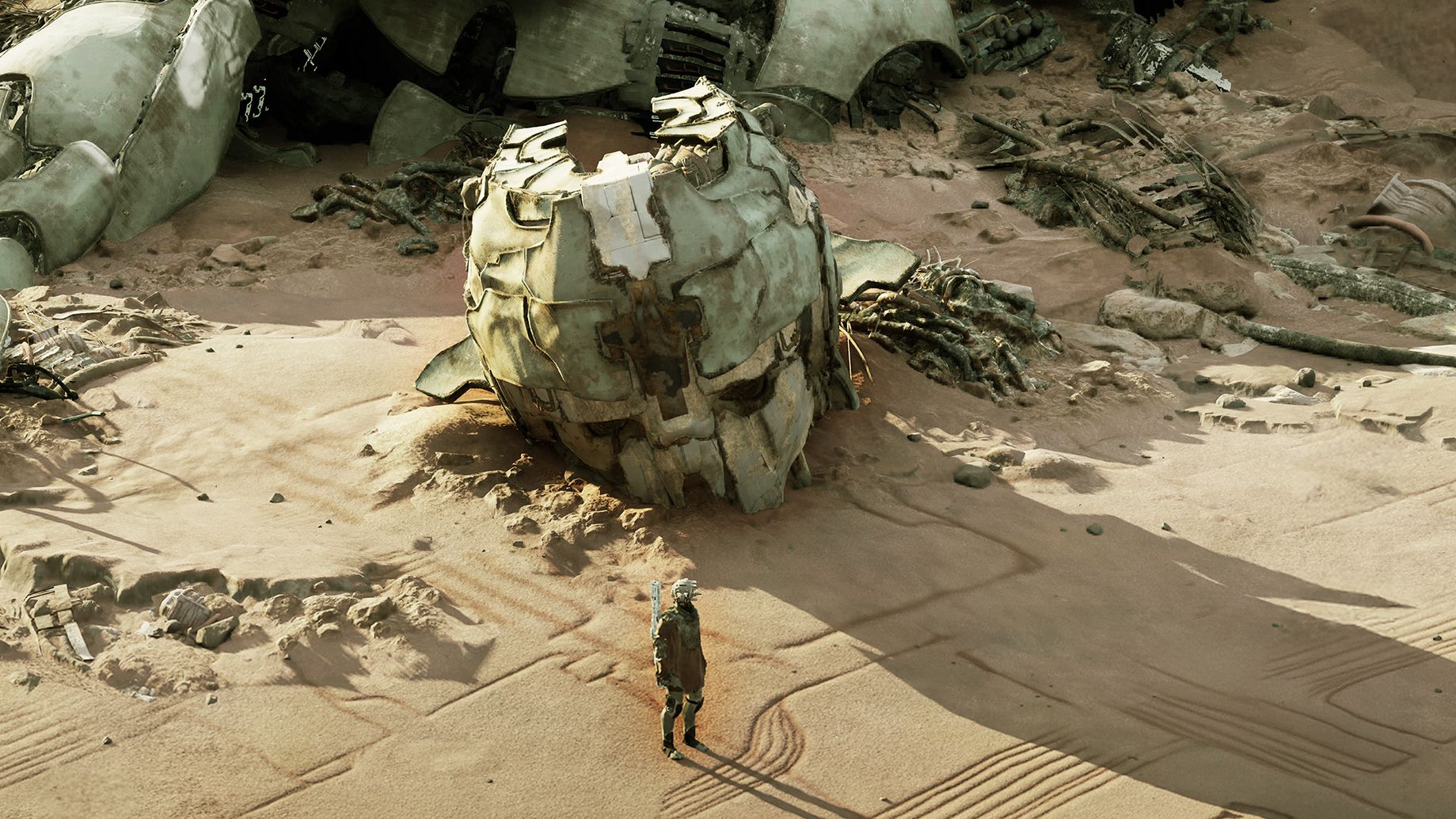
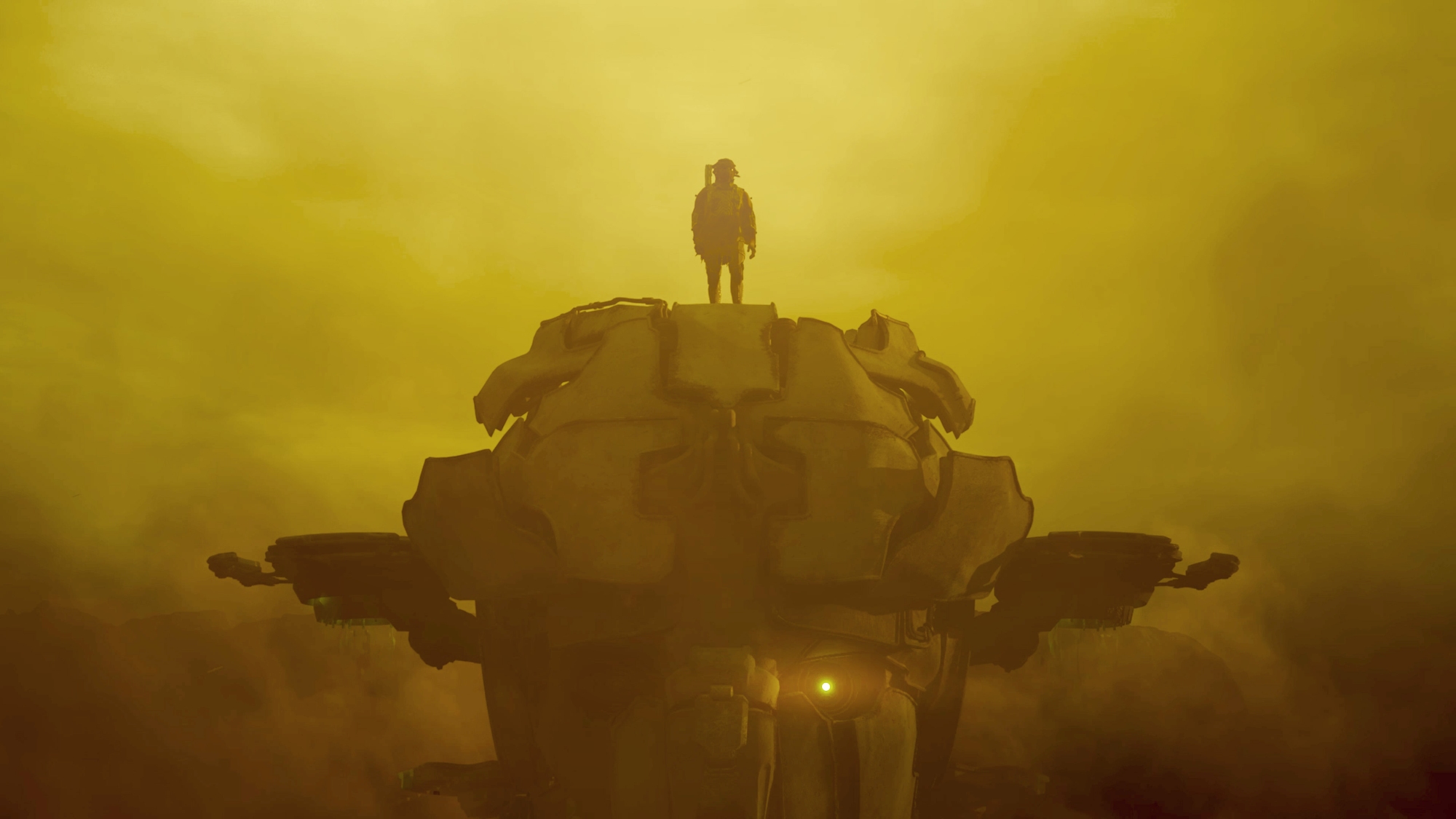
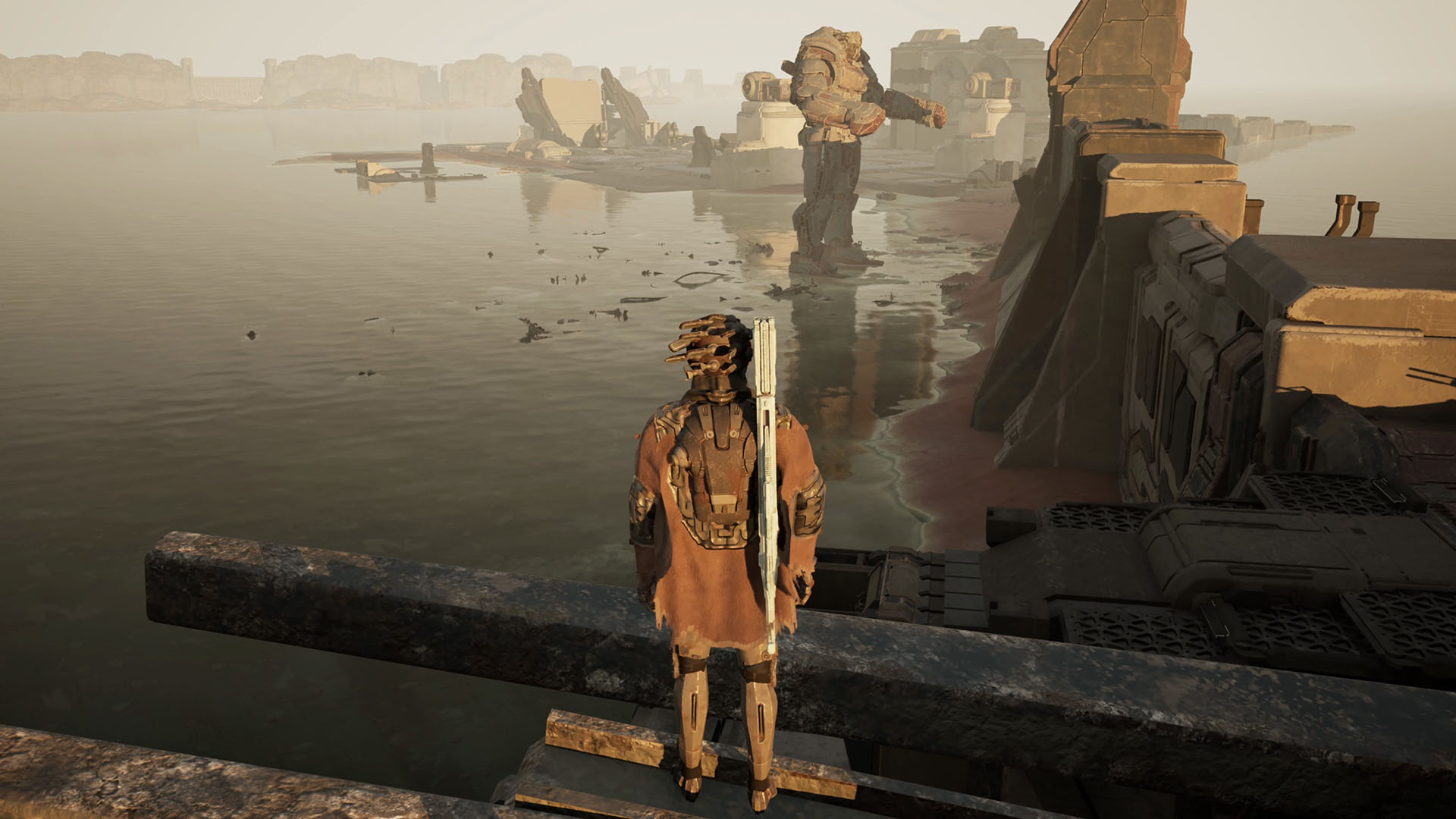
I've seen more of Gen Atlas, the new game from Ico and Shadow of the Colossus creator Fumito Ueda, than was on display in Friday's trailer. But not much more. In a meeting with Gen Atlas's developers and publisher Epic Games on Sunday, I saw just another minute or so of the game's so-far silent protagonist wandering the desert; more colossal robots; a bit more shooting; and a lot more sand.
It was tantalizing, but the kind of footage that simply created more questions than it did provide answers. But the real purpose of the meeting was speaking with Ueda about the development of his studio's new game—the first in a decade, and the first he's ever released on PC.
Epic's publishing team introduced it as a "whole new sci-fi adventure that has all the hallmarks of a classic Ueda experience," so that's where I started.
What, for you, defines a 'classic Fumito Ueda experience?' When you think about the experience you want to deliver to players, what is that, in Gen Atlas?
Fumito Ueda, director: "For me, the first thing that is important, and what I think defines a Fumito Ueda game, is that it's something different and unlike anything else available in the market. Not that it needs to only be unique, but in totality, the uniqueness also needs to be balanced within the game experience. Secondly, it's important to me, and I hope signifies what is a Fumito Ueda game, is that this experience is something you can only see, and can only be built, because it's a videogame.
(Image credit: Epic Games)
In Shadow of the Colossus, I remember the moment it transitioned from cutscene to camera control shocking me. The way it looked and felt—no other game felt that way at the time. You used filmic language in a way that was not common in games then, but is much more common now. You were ahead of the curve, but for you now, what is the secret sauce when other games have caught up to that cinematic presentation?
You just asked me a great question because it's a difficult one for me to answer. I consistently think about how I can bring in something unexpected. It's an element of surprise, but I don't think about it in a way that's just for impact's sake. It has to be unexpected but also at times sort of familiar. Let's say there are default or given standard-ish game mechanics across many games. Because I know that's very familiar and comfortable to a lot of players, I don't just take it as-is. I want to continue to refine it.
And in the end what's entertaining to the player is what I am always in the pursuit of, making sure it's fun to play. So in that sense it might sound like 'okay, we need to think of something to integrate or carry over from things that already exist.' But if it's a copy and paste process anyone can do that. So I'm thinking about what is the fun and entertaining essence that's in there, but to come up with some sort of additive that will make it even more entertaining, but also unexpected at the same time.
(Image credit: Epic Games)
The shooting mechanic seems like a specific example of this in Gen Atlas. There are many shooters in videogames, so what's the unique mechanic you tried to bring to the shooting that will surprise players or feel different from other games?
One thing I want to make sure that people don't misunderstand—yes it's new, and probably unexpected from me, but it's not going to be the main mechanic in this game. Simply said, it's really one of the ways that you're going to be able to overcome hurdles in the game.
But it's not 'how many enemies can I shoot down and how many points can I earn.' It's not implemented in that kind of way. It's one of the ways that you're able to progress, and I want to be very selective of the word: I don't know if 'frustration' is the right way to frame it, but whenever you're playing a game you want to be challenged, right? And you start to feel a little bit of frustration because you're not winning in the most simple and easy manner.
It's more being challenged—it's not intentionally giving players frustration, but to be challenged...
For me, you want to give a healthy amount of frustration, but by the time you earn or learn how to use said mechanic, you see the potential of having that sense of achievement once you utilize it. The shooting mechanic in this game I position as such that maybe there's a more effective way to overcome some hurdles, and that's how I see this kind of naturally implemented in the game.
The nuance of "frustration" vs. "challenge" comes up at this point, and Ueda's interpreter elaborates:
It's more being challenged—it's not intentionally giving players frustration, but to be challenged, and then at a certain point you feel like you have on-boarded a new mechanic and you're going to be able to accomplish , and the sense of achievement once you've done that is what we're looking for here. The shooting mechanic is one of the ways that he thought, in this world's setting, is a way to do that.
(Image credit: Epic Games)
That suggests to me, and maybe I'm reading this wrong, that shooting is perhaps a quicker, more direct solution for challenges or puzzles where there might be an alternative way of getting around it.
The short answer is yes.
But to add, it's also for players to feel that your existence matters in the setting. So for example, in Ico it's not that you have to defeat all the enemies that you encounter. That is not what the game is asking you to do. But in the moment, you may feel as if you have to defeat certain enemies, or you can choose not to. So in that sense, it's not to score points, but it's there so that it matters, and you feel that you do exist in that world.
In Shadow of the Colossus, defeating the colossi gave you this feeling of triumph but also mourning, because you'd killed these majestic creatures. Are you trying to evoke that same feeling with the robots in this game, or are they fulfilling a different relationship with the player?
In the trailer you'll see robot vs. robot, and then the main character and the robot. In Shadow of the Colossus and what you experience when you defeat them, feeling a little mourning from killing the creatures, there isn't something that is similar to that internal conflict in that way. But maybe that's all I can say at this point, for that.
Is your character also a robot in this game, or are you a human in a suit?
At this point Ueda checks with the Epic publishing team: Has he previously used the word "humanoid" for the player character?
Yes, so, not a human with a robot suit on, but a humanoid. And the robot head is obviously part of a robot.
"Humanoid" is still ambiguous. Is that intentional?
Ueda asks the publishers how much detail they're giving at this point, who respond "let's keep the mystery"
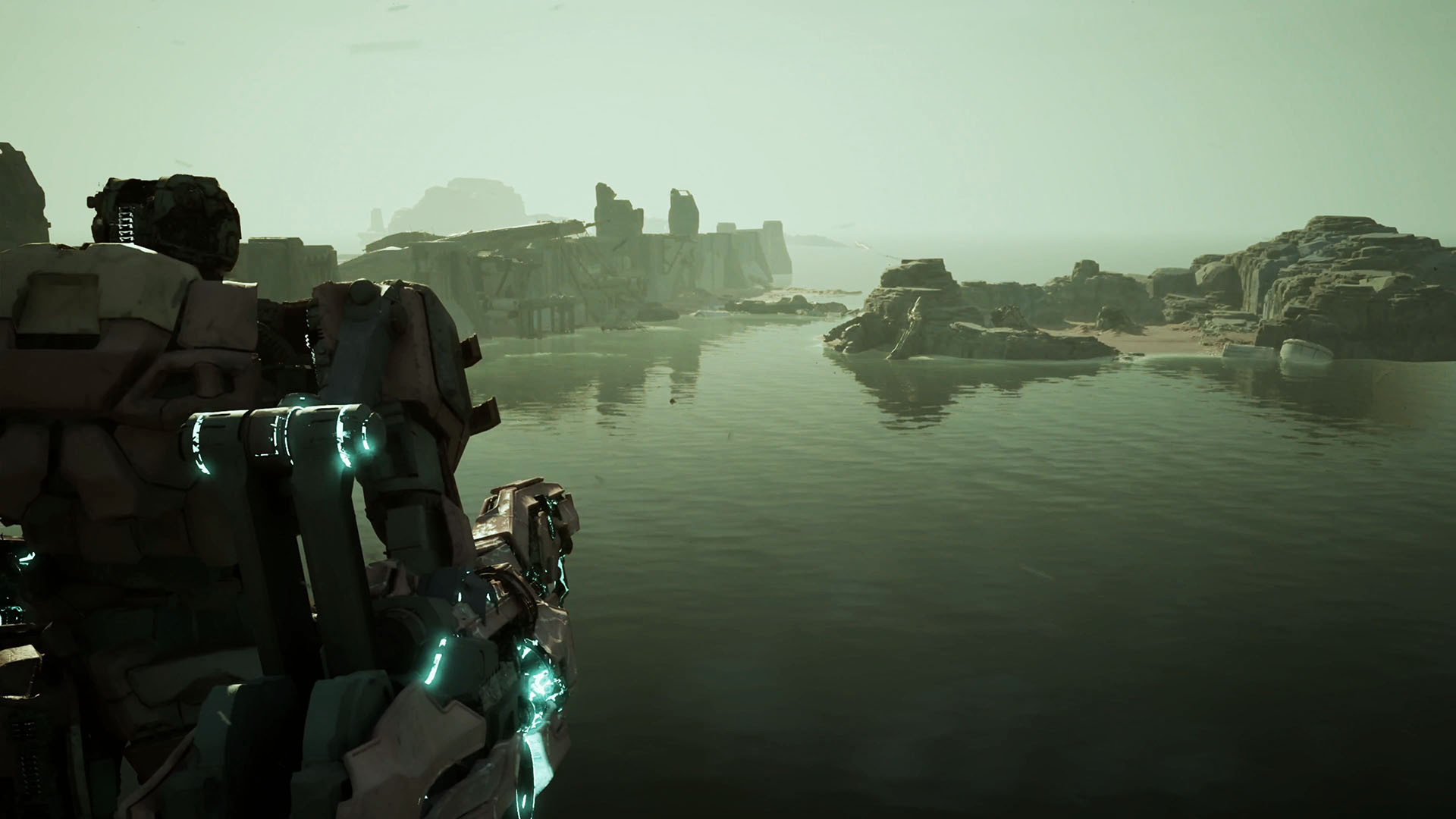
(Image credit: Epic Games)
I just wanted to make sure I understood! You strike me as someone who draws inspiration from many parts of your life, or many places, not just other games. What about Gen Atlas reflects who you are now and where you are in your life compared to prior games?
On inspiration, just at a high level, I think you're spot on. Where I grew up, how I grew up, what I consumed over my lifetime, all of it is a source of my inspiration, and it's really hard to call out any one or two, whether pieces of work or even genre in terms of entertainment or media that I've consumed. But for Gen Atlas, thematically, there are some thoughts that went into it.
What do they want to live out in a videogame fantasy story? Who do you want to be in these game universes?
First of all, videogames are part of a large space of entertainment, and when I think about entertainment, I want to think about what's going to appeal to the audience. Even for all of my previous work, there's a theme that hopefully is very universally not just appealing, but accepted. In Ico, there's a boy and a girl relationship. With Shadow of the Colossus, anyone would want to go after giant monsters. You want to live out that dream and see what that's like. With The Last Guardian you start with something that's cute and loveable and charming as a pet, and now it's this large creature that you want as your companion.
When you boil it down to the simplicity of these things, they're not that unique, and I want to stay true to what is going to be appealing to a lot of people. What do they want to live out in a videogame fantasy story? Who do you want to be in these game universes?
The next thing I thought about, which is now what you see here in Gen Atlas, is of course I want to go into a giant robot. I want to fight giant robots. That's where it all started.
Even in real life, here we are today talking about whether robots are going to maybe control our next decade. We're going to see more real life stories about humanoids and robots taking over parts of our lives and world. So I felt that this, as a theme in general, would be of interest to a large audience, and from there I started expanding on that idea, building the world, and now it's a sci-fi world. So it didn't start off with deliberately thinking I was going to build a sci-fi world. It started off with the theme of wanting to have robots in this game.
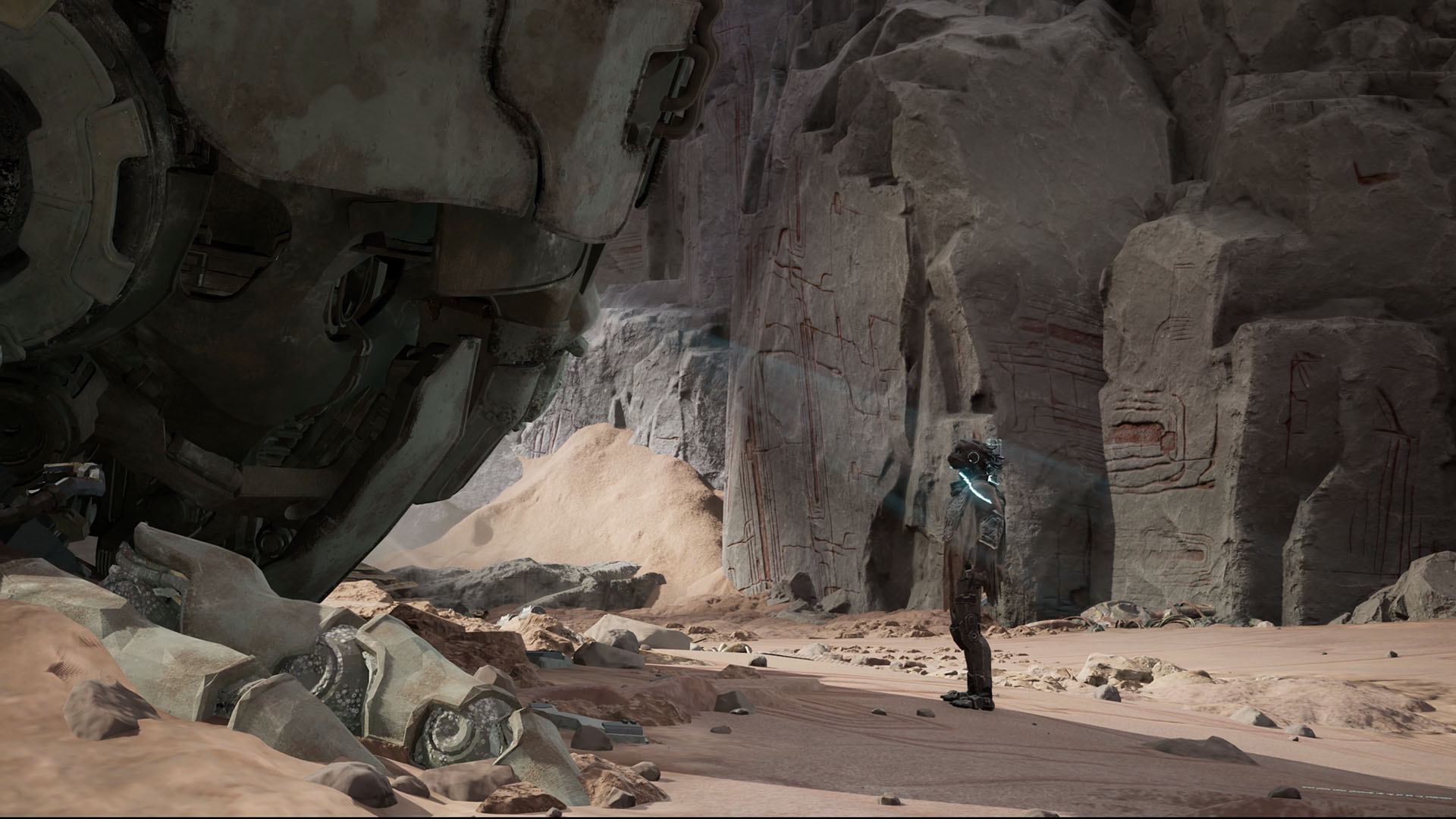
(Image credit: Epic Games)
You mentioned the backdrop of AI is influencing our culture now. As a creator, do you have strong feelings against the use of AI in games?
Personally, not just AI, but I'm all about learning new technology. There's so much information, so I just have my antennas up to try to absorb as much information about the very fast-paced way that things are moving. So personally I have a high interest in R&D.
However, when it comes to our actual work at Gen Design studio, we really only use it in a way that is efficient and effective on the project management side—coming up with schedules or looking up how to best use a new tool we haven't had our full onboarding experience with, or summarizing meeting notes. That's the extent we use it in-house. Everything that is considered game development is made by our own people, made by humans.
I imagine there are fans who will probably be relieved to hear that last bit.
Yes, I hope so too.
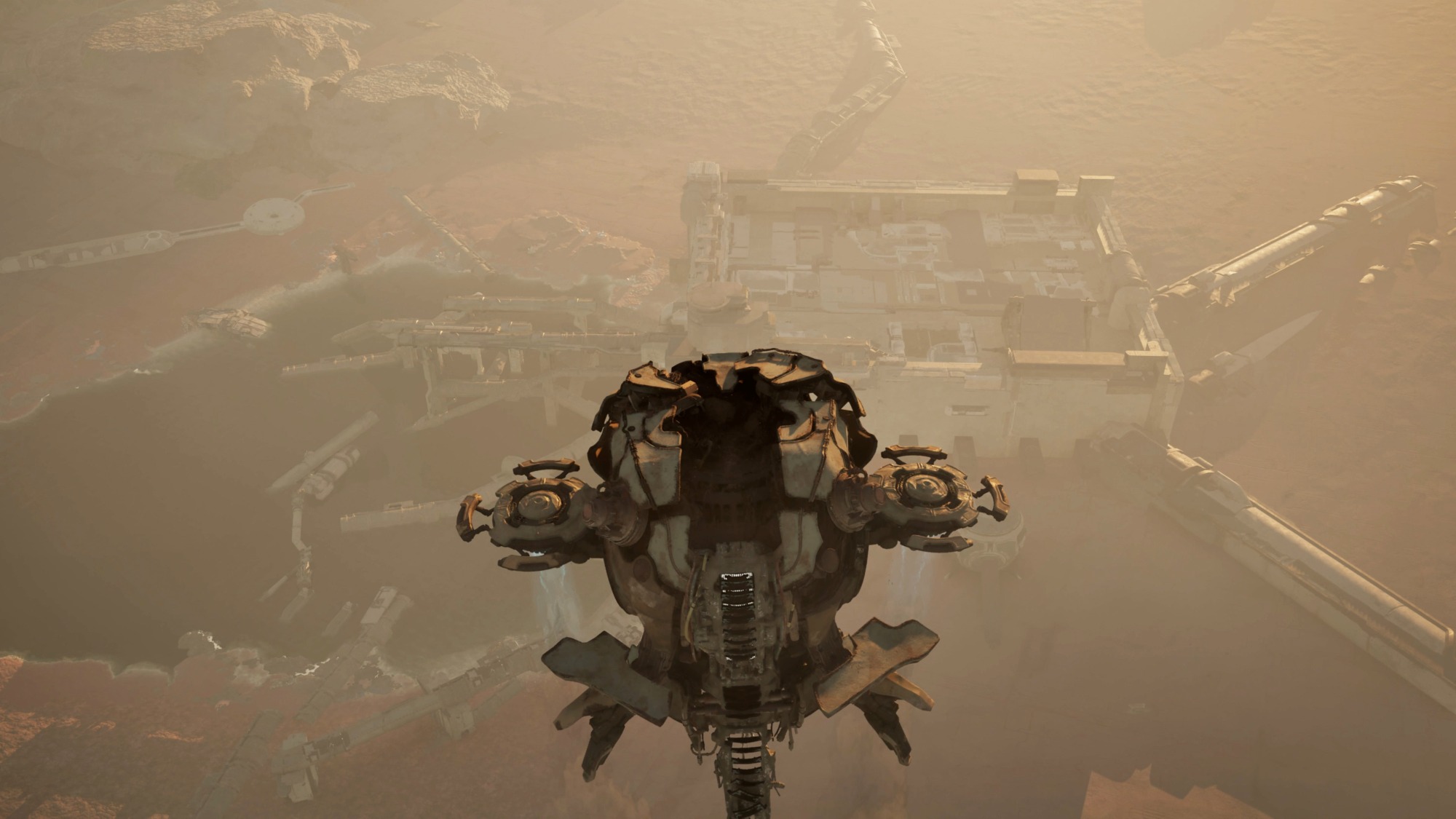
(Image credit: Epic Games)
As a writer for PC Gamer, I'm excited this is a game I'm able to cover. How does it feel for you to be directing a game for the first time that's not exclusive to PlayStation? That's been your life for a very long time.
Obviously all my previous games have only been released on one platform, the PlayStation audience is the only one that's been able to play it. I have nothing but excitement and am happy that this can reach a lot more players just from day one. I'm looking forward to it as much as I think new players are looking forward to experiencing a Fumito Ueda game.
In that sense I'm seeing it as a very similar market, whether it's console or PC.
In terms of how I feel about this being the first time it's going to be outside PlayStation, is there something that comes back to me about trying to entertain the PC audience? I don't think there's really a large divide in that sense. Whether you're console-focused or a PC-only player, I think what you're looking for and hope to get out of a game you purchase or download is a new experience. There's something fresh and something new to look forward to. In that sense I'm seeing it as a very similar market, whether it's console or PC. I just want to deliver something that feels new to those players.
A very different question, but can you tell me anything about the sand in Gen Atlas? I'm curious if there are systemic interactions with wind, or if the environment changes a lot.
Ueda gets quite animated about this; apparently no one has asked about sand.
I think what I can say, and maybe it's a hint, but the two real central themes of this game are we wanted to feature robots, that's one very apparent obvious thing, and there's going to be a vast sort of span of time that is also a key element in the storytelling, and so the environment—there are changes that happen over these large amounts of time. Perhaps that has something to do with how you see the environment, and how the changes are going to be apparent.
2026 games: All the upcoming games
Best PC games: Our all-time favorites
Free PC games: Freebie fest
Best FPS games: Finest gunplay
Best RPGs: Grand adventures
Best co-op games: Better together


